 Products








Ready to get started?
No matter where you are on your CMS journey, we're here to help. Want more info or to see Glide Publishing Platform in action? We got you.
Book a demoWatching a UK government committee question AI industry figures on content and copyright yielded some enlightening moments, and not necessarily for the right reasons.
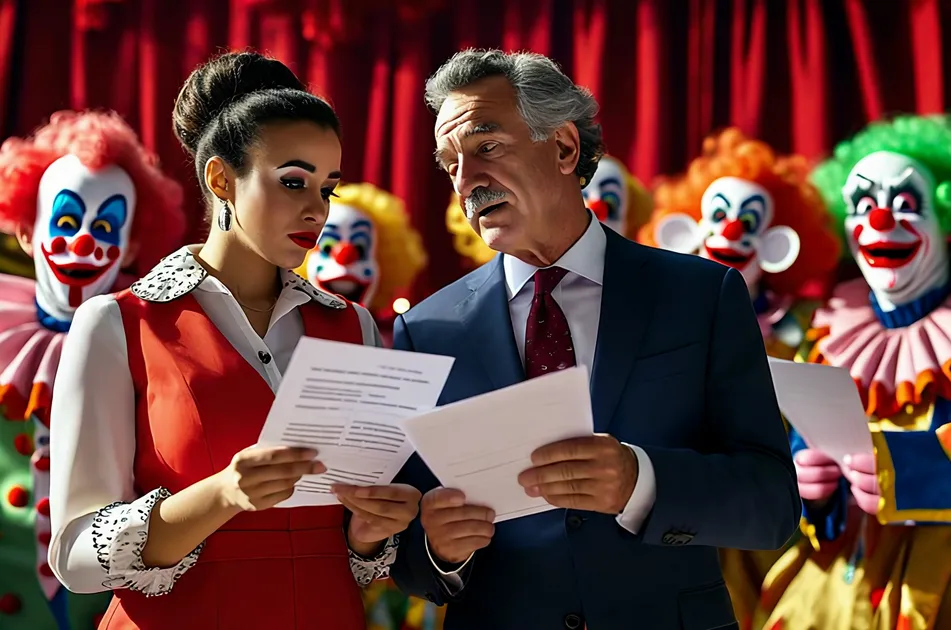
Public Policy representatives are an upward evolution of public relations executives, with a title meant to convey some gravitas beyond what we once knew more honestly as spin doctors, or other less pleasant terms.
There's nothing wrong in that of course. Such people are required by businesses and organisations to put forward a collective or corporate point of view, and as such can't all be expected to actually believe everything they say, but it seems in much of the developed world these operatives outnumber journalists.
While much of the world has been tuning into the latest series of The Traitors, I was instead this week watching my own form of semi-scripted reality in the shape of coverage of the UK parliament's House of Lords Communications and Digital Committee hearing into digital copyright.
"Why so, Rob?", I hear you ask. Well, as the race to establish coherent and equitable treatment of copyrighted content in the age of AI larceny heats up, such enquiries become the real FOMO content of choice for us in the creative industry. Sorry, Claudia. It was especially interesting too against the clownshow backdrop of the Grok/xAI debacle, and the UK police's misuse of AI too.
I am not in a position to give spoiler alerts on the recommendations or findings of the committee, but we were treated to an appearance by Roxanne Carter, Global IP Lead, Government Affairs and Public Policy for Google. It must be said, and it's possibly an indication of the endlessly suspicious nature of my character, that if there is a public policy, then there must be a private one too? Otherwise, it's just policy. The public part is the spin component.
This turned out to be the case in this hearing. Carter calmly voiced Google's public position that "When it comes to training AI models on freely available content that is available on the open web, we do not believe that we should license." License here meaning pay.
"What the AI model is trying to do is analyse huge amounts of data to identify patterns and statistical relationships between words, language concepts. It is not an information retrieval system. It is not a database. It is not looking to make copies. What it’s trying to do is develop new tools to then produce wholly new content," she said.
Well, no it isn't. If you understand how such systems work, she seems to be saying that the ore poured into a smelter has no absolutely no relation with the finished product it may become. You still have to pay for the bloody ore you know.
Make no mistake, Carter nor anyone at a Google offshoot outside of California, cannot deviate from Google's official line on this, and it is only the words she chose to explain that line that are her responsibility. She was very keen on trying to impress the politicians gathered to question her - and question her pretty well, it must be said - with the enormity of Google's task in gathering data to power its LLM systems. It was made to sound an almost selfless endeavour and, and while I was playing a quiet game of word bingo every time she said "ecosystem", I was left thinking if Gemini could do the same job for the committee, for less money.
Asked carefully about why Google couldn't actually identify who it had actually taken data from as it struggles to improve humanity, she leaned heavily into this enormity, implying that it was an impossible task. "We've stolen so much stuff you can't possibly expect us to know where it all came from" could have been a more honest reply, like a hoarding jewellery thief finally run to ground. May we venture that if it was in Google's commercial interest to go through that data with a view to discovering who it did actually belong to, you can bet it would be done in a nuclear-powered minute.
Interestingly, Cloudflare have got right up in Google's grill it seems, mainly for asserting that if Google started to pay for content, everyone else would too. As it was mentioned at the committee that some in the tech industry have called Google "a bad actor" in the current situation, Carter immediately asked if that remark was attributed to Cloudflare. "No" was the response, though perhaps the committee should have said they cannot tell to whom the comment was attributed. In any case, Carter seemed to immediately make a cross by or underline something in her notes, in a manner that made me sympathetic to both the pen and pad.
Carter's final answer to the committee was that, for Google, "It's not a question of that we won't pay, I think we need the certainty of what we are paying for."
If only there was a way to tell...
The UK government is in a similar bind to other governments in dealing with the copyright vs LLM ingestion issue. Initially appearing to favour of an "opt out" clause, with the presumption that training data should be largely free to gather, after public consultation and some well-placed interventions by politicians and creatives, it has now rowed back on the opt-out position.
Rowing back to where is now the question. We can expect further clarity in March when an economic assessment of Text and Data Mining report is to be published, apparently.
The initial burst of dazzling light around LLMs and AI is fading somewhat and allowing some politicians to regain their senses, yet there is still a persistent erroneous belief in places which allowed the "opt out" model to be initially favoured, clear in the responses of Oliver Ilott, the UK government's grandly-titled Director General for AI (it says Interim Director General on the government's site).
Ilott told the committee that "if the opt out process becomes extremely straightforward, then everyone just withdraws their material from the market. That might be fine in some sense, but if you went down the route of creating an exemption, it would be because you wanted you wanted people to access the material for training, and if everyone withdraws then you've undermined the primary policy goal."
I feel, as an English graduate, Ilott might wish to consider the word "market" in this statement. The taking of goods with neither owner consent nor payment being made isn't usually the foundation of a successful market. It reeks of "That's our potato, comrade."
An unexpected ally
Money was mentioned, although not much by Carter. For the witnesses, that was - perhaps unexpectedly for rights-owners - left to Guy Gadney, Chief Executive Officer of AI content tools firm Charismatic.ai. A good advocate for payment, he told the committee "I applaud Roxanne and Google valuing the creative industries, my comment is that it is not valued enough. Putting value on needs to quantified, not just said. Secondly, the payment terms we've started to see coming as settlements are one-offs to creators - through the Anthropic case - that is unacceptable, unacceptable," and went on to favour licensing deals that reflected the true "long tail" value of content.
"We must acknowledge the shift in revenues from traditional media. Revenue has shifted over 60% from linear to digital platforms over the last 10 years, advertising income has shifted over 77% to platforms like Google and Meta," he told the committee.
Then he hit the good running, saying that the copyright debate could be a "cloak" for what was being discussed, as actually what was being talked about was "money". Note - not ecosystems. MONEY.
"In a very un-British way," Gadney continued, "let's start talking about money, follow the money, look at where the money is going, who has it, and how much of that money is getting through to creators themselves."
The seats weren't squeaky, so it's unclear if Carter shifted at all. In her former guise at broadcaster ITV, she would no doubt have cheered.
She had made a reference to the long tail of human creativity being important to Google, but immediately quelled any fanciful thoughts this conjured by adding "which we are constantly striving to deliver on." Be careful with what you're delivering, you're in danger of dropping it right on that tail.
As a final observation, and an indication of the "all fur coat and no knickers" nature of many political discussions around tech in the UK, I decided I'd like to listen to the final hour of the hearing as I took a walk.
Selecting the option from the government site to download an audio file to my mobile to make this possible, an email alert popped up. My file would be ready in 24 hours. Watch out on the cutting edge!
No matter where you are on your CMS journey, we're here to help. Want more info or to see Glide Publishing Platform in action? We got you.
Book a demo
