 Products








Ready to get started?
No matter where you are on your CMS journey, we're here to help. Want more info or to see Glide Publishing Platform in action? We got you.
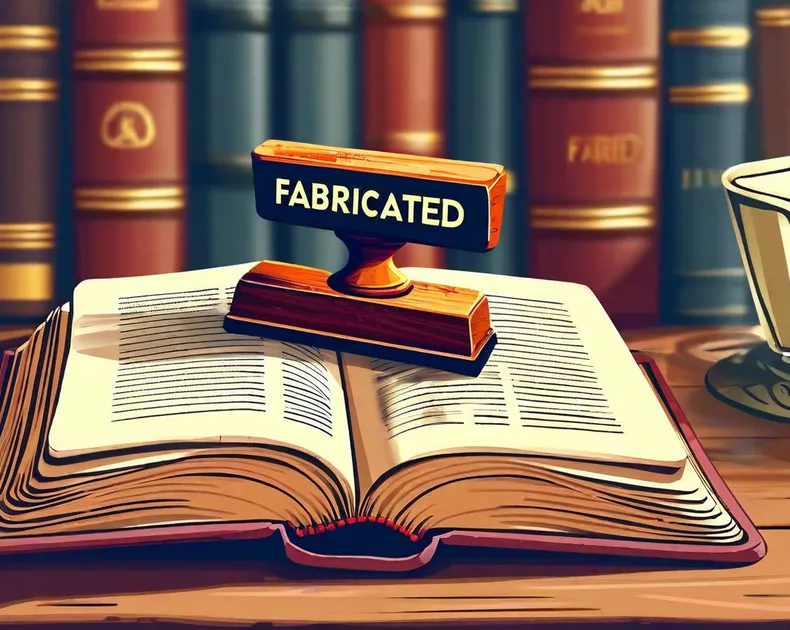
Book a demoThere's a new book out about the future of the media and AI. Maybe we shouldn't be surprised it contains a number of "synthetic quotes" and AI fabrications.
It could be supposed that we would reach a point, where, as long as the use of AI systems in producing written content was clearly flagged, then that content could be treated appropriately by the person reading it and placed into context regarding its probable veracity and worth.
If no-one is trying to fool you, there is still a question around how the AI was utilised - was it used to produce the core text, or to suggest edits, to re-write, or as a glorified spell-checker - which does matter when considering a piece of content. However, at the very least knowing AI was involved in any part is fair warning to the reader.
What to make then of a mild furore this week surrounding the weightily-titled book The Future of Truth by a chap called Steven Rosenbaum, who is, apparently in the US anyway, a bit of a thinker around technology and media. This book was widely trailed, and some expectation of insight was expected of his writings.
However the insight given is possibly not the one anticipated, although it does make for great satire, after The Future of Truth was found to contain a whole lot of fiction in a series of AI-fabricated quotes. Not just small things either: complete coherent quotes, attributed to some fairly prominent people in the tech world, who did not say them.
According to the NYT report, "One of the quotes is attributed to Kara Swisher, a prominent technology journalist, in a chapter about AI lies." The NYT continues, "When asked about the quote, Ms Swisher said in a text message that she 'never said that,' adding that it seems the quote was made up by AI and not Mr. Rosenbaum. 'I also sound like I have a stick up my butt, according to ChatGPT,' Ms Swisher said."
A number of other academics and thinkers have found themselves similarly fabricated within the covers of the book, sometimes to the point of misrepresentation, sometimes to the point of modification, or simplification.
The Future of Truth indeed. As someone once observed, if you can't be a good example, at least be a terrible warning.
The thing is, Rosenbaum actually played it fairly within the fast-changing "rules" of the current era. If, as I posited earlier, content is clearly flagged as having used AI in its production, then the reader is not being misled.
Rosenbaum did indeed include the information that he'd used both ChatGPT and Claude "during the research, writing and editing process" in the book's acknowledgements. He certainly wasn't trying to mislead in that respect, and bearing in mind his subject matter, he may have thought he was obligated to use them, as a way of proving his pudding.
Either that, or he was just lazy. Because if you've been a news journalist, or any writer who uses direct quotes from actual people, you will know just how important getting a quote right is. I've sat and listened to a particular piece of audio from a vital interview 50 times or more to resolve exactly what was said at that particular moment, because, you know, people don't generally speak in perfect quotes and your job is to get what they've said RIGHT.
Given that, I would describe Rosenbaum's efforts as sloppy, to use an appropriate mot du jour.
What then, of the author's reaction to this reputation-damaging incident?
A statement to the NYT said that the book had "a handful of improperly attributed or synthetic quotes" and that Rosenbaum had started his own investigation.
Investigation? Like a crime scene? I can well imagine some of the fearsome news editors who have featured throughout my career being told I would "investigate" if I had been called out for filing a load of fabricated dross. I suspect I'd be investigating the hook of my coat as I was booted out of the office.
In his statement to the NYT, Rosenbaum added that the entire episode "serves as a warning about the risks of AI-assisted research and verification, that is why I wrote the book."
"These AI errors do not, in fact, diminish the larger questions that the book raises about truth, trust and AI and its impact on society, democracy and editorial."
You're right there. Once again, if you can't be a good example, at least be a terrible warning. Problem is, he gets paid either way, even if it is for producing a serviceable doorstop in aid of humankind's progress. How his reputation suffers is something that will take longer to tell.
No matter where you are on your CMS journey, we're here to help. Want more info or to see Glide Publishing Platform in action? We got you.
Book a demo
