 Products









Ready to get started?
No matter where you are on your CMS journey, we're here to help. Want more info or to see Glide Publishing Platform in action? We got you.
Book a demoA domestic LLM project in the Netherlands is well-placed to assert a bit of sovereignty over the supremacy of the big players.
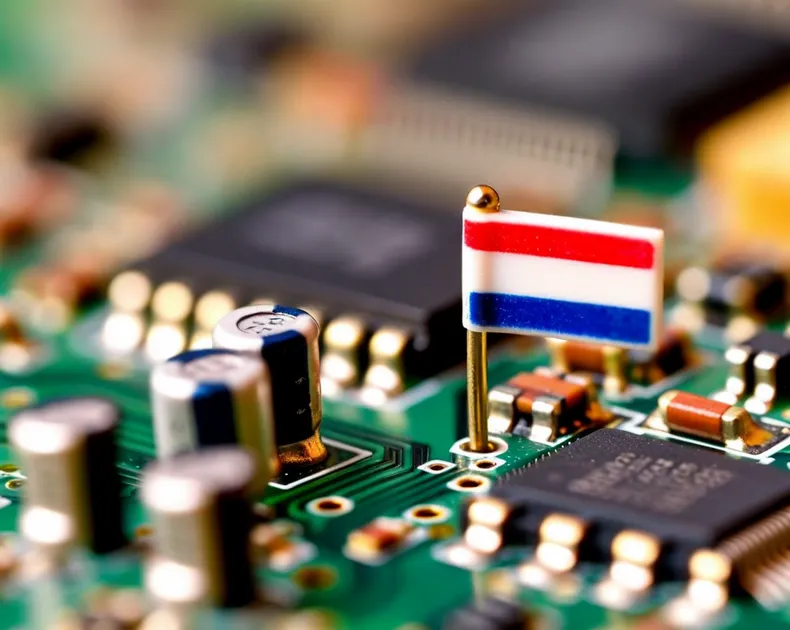
European aspirations towards doing anything significant in the tech spheres dominated by large US companies have become something of a meme among considerable parts of the commentariat, which these days means virtually anyone on social media.
The reasons for this are manifold, but they manifest themselves in the form of European policymakers being overly proud of legislation designed to limit the use of a technology they have had no hand in creating. It feels a bit like being terribly keen on limiting how fast steam engines can travel because they fear people's eyes will pop out at sufficient velocity, while angrily shouting at the steam engine brigade from a horse and cart.
This is of course a partial truth, and yet US commercial dominance in tech is real, and with it comes the funding to further work on the technology to increase that dominance. Europe lacks not in brains, but in focus.
However, there are ideas and efforts that cut against this narrative within Europe and one such is set to make its public face known in the Netherlands soon, with the launch of GPT-NL.
The aim of this government-backed project has been to produce a Netherlands-specific LLM, using Dutch language sources, and with the full co-operation of NDP, the national umbrella organisation for commercial news publishers.
As an excellent full write up on the project in Computer Weekly puts it "GPT-NL claims to be the first AI initiative anywhere in the world to have reached paid, consensual agreements with all major publishers in a single market for the use of their content in model training."
This project is actually along the lines of what could be an ideal application for the technology. Devoid of irresponsible talk of machine sentience, and happily free of tech cultist hopium, it's actually a fairly straightforward effort in concept to harness good data, that has been licensed, and hook it up in a way that is useful for the consumer, those being people in the Netherlands. The Dutch, if you know them, are a fairly direct people.
"We set a precedent that strengthens the position of journalism in the Netherlands over the long term," according to Rien van Beemen, the chair of NDP Nieuwsmedia, in the project's latest progress report. "AI innovation can happen ethically, without large-scale unlawful use of journalists' work."
GPT-NL is now on trial with a number of different users, all within the public sector and aims for a broader commercial roll-out later this year. It has reportedly reached technical benchmarks that place it within competitive parameters when set against an OpenAI product, for example.
As a side note, I do enjoy the fascinating game of performance metrics for LLM models, which are typically so obscure that surely someone has been tempted to just make one up. Bifurcated Ohm Throughput. Maybe they are. How would we know?
Is this Dutch model a glimpse of a possible future? One thing that possibly counts against it is language. Dutch is unique. It features sounds that are deliberately impossible for Germans to make, never mind English people. They have a language moat, in effect, and it could be argued that a specialist LLM using Dutch language sources is really a necessity, lest they be overwhelmed. There is also a commercial proposition in that cultural fact.
However, that's not the whole story. The sources are the more substantive part of it. This is an agreement, forged at depth, with commercial news organisations, the very organisations that are under most pressure in the current technical epoch, to provide GPT-NL with high quality data. It is a leap of faith by those organisations, but the situation requires such leaps. It is also to be hoped that the sources reflect different opinions and positions, as if it is felt by some users that GPT-NL is a form of government propaganda dissemination operation, then given the febrile political situation in the Netherlands, it will fail to attract broad adoption.
Nevertheless, if successful, GPT-NL could provide a model for others, and with user adoption comes improvement. Whether such ideas are enough to pull Europe out of the long and obscenely well-funded shadow of the big US players is yet to be seen.
No matter where you are on your CMS journey, we're here to help. Want more info or to see Glide Publishing Platform in action? We got you.
Book a demo
