 Products









Ready to get started?
No matter where you are on your CMS journey, we're here to help. Want more info or to see Glide Publishing Platform in action? We got you.
Book a demoThe SaaSpocalypse is not coming for well-built software. It is coming for software that was never built to last.
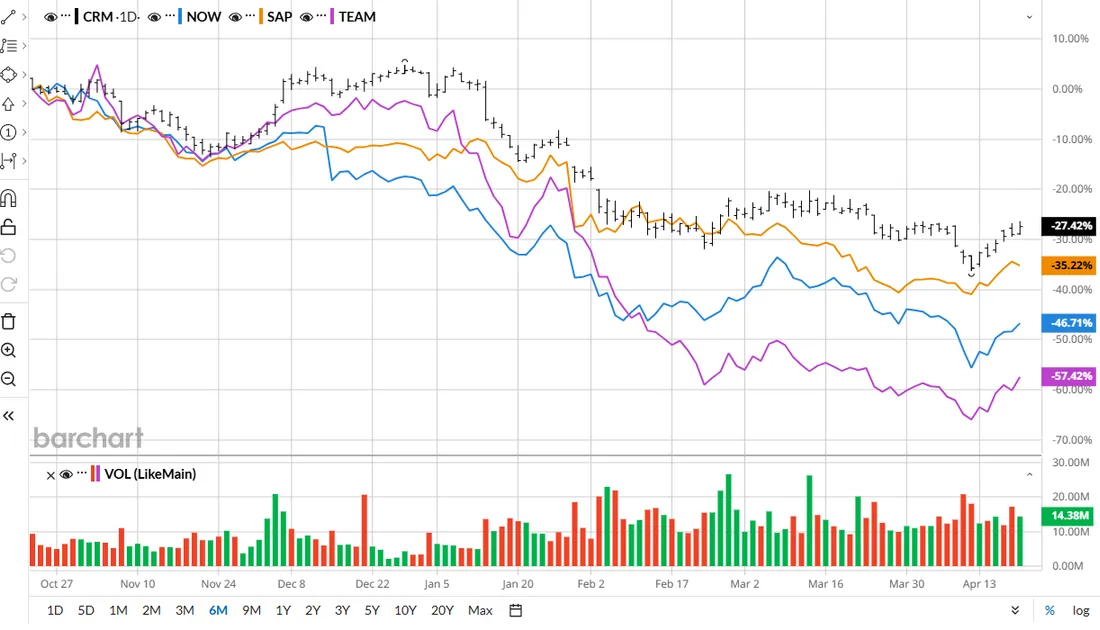
Another 'pocalypse is doing the rounds. Right now it's "SaaSpocalypse", which sprung from a few hours in February when hundreds of billions of dollars evaporated from both fit and bulbous software stocks after someone suggested AI agents will make SaaS delivery obsolete, that per-seat licensing models are dead, and the entire category is heading for extinction.
It makes for a good headline, but as an analysis of what is actually happening in enterprise software, it’s lazy and wrong. And somewhat ironic, given that your "agent" will likely be a SaaS product, and you can use your imagination for how it will be billed when such historic investment needs to be recouped.
I say all this as someone who has spent 30 years building technology for big media and entertainment companies, and runs a SaaS business. If the SaaSpocalypse was real, I should be worried.
I am not. In fact, I can’t remember a time when I have been more excited about what we are building and where our industry can go.
The SaaSpocalypse narrative treats SaaS as a single, undifferentiated category. It lumps together everything from project management tools to enterprise CRM to specialist publishing platforms, and declares all equally vulnerable to AI disruption.
This is like saying "all vehicles are the same!" then pulling Pikachu face when a bicycle struggles to cross a river.
For sure many SaaS products are exposed, especially those built on business models which were restrictive and resented, and relied on nickel-and-diming features or capabilities behind added payment tiers or costs.
Here is a truth: if the main reason your customers stay is because leaving is expensive, the agent age is going to be very uncomfortable. If you survived because you locked customers into technological immobility too painful to exit, or charging per seat or per session for tools a well-designed API could handle in seconds, there is a reckoning coming.
AI agents will make customers more mobile, not less. When the cost of evaluating and switching services drops - and that bit is dropping fast - the SaaS companies that survive will be those delivering genuine value at a fair cost.
Any which rely on lock-in, poor interoperability, or the sheer inertia of "we've always used this" will face customers who have even less patience for poor service and inflexible platforms. Better options will be easy to find and fast to adopt. That is a good thing, particularly for companies like ours.
The SaaS products that will thrive are the ones providing the underlying infrastructure, data, and logic that agents need to operate. Agents do not conjure business processes from thin air — they need structured data to work with, APIs to call, workflows to execute against, and domain expertise encoded into the platform. Strip away the platform and the agent has nothing to act on.
This is the distinction the SaaSpocalypto crowd has missed. The question is not whether AI agents will change how software is used. Of course they will. The question is whether your software solves a real problem, whether it's flexible enough to adapt, and whether it can ever be useful to anything other than a human clicking through a screen.
Last week, Salesforce announced Headless 360 at TDX 2026. The core idea: expose every CRM capability as an API, MCP tool, or CLI command, so agents can operate the platform without ever touching a browser. Parker Harris, Salesforce's co-founder, asked the question out loud: "Why should you ever log into Salesforce again?"
It is a significant move, and I respect the ambition and the courage to disrupt your own suite of products.
Let’s be clear about what it represents: Salesforce is a 25-year-old platform that was primarily built around a Graphical User Interface and for humans navigating screens.
Going headless is not a feature release for them, it's a fundamental re-architecture of how their offering works. They said themselves they made the decision two and a half years ago to rebuild for agents. That is a long road, and they are still on it.
The real casualties of the agent age will not be SaaS companies as a category, or inherently any other "type" of company. They will be those with platforms and offerings that were never built for the world we are now in, and the businesses pouring money into propping them up.
I'll use WordPress as an example, because it is so well known to anyone who has built a website, and especially in our sectors when it comes to moving content around.
The entire value prop of WordPress was it being an integrated, monolithic system where the CMS and the front-end are one and the same. That is literally the point of it. So when people talk about "headless WordPress", it’s a version of WordPress where the thing that made it WordPress in the first place has been stripped away, to spend significant developer time and money rebuilding everything the monolith used to give you for free.
At which point, what exactly are you getting? A cynic would say a very expensive content entry screen and a bespoke CMS you are now paying to maintain. I err on the side of uncynical as much as I can, however I don’t think the agent age will be kind to that kind of tortured setup, particularly when the underpinning architecture has not changed.
WordPress is just a very visible example. The same logic applies to any generic platforms from a bygone era, CMS or otherwise, which have been stretched, forked, and bolted onto in an attempt to stay relevant and sustain a services billing model. That's just nickel-and-diming by a different means.
Media and publishing has seen it countless times: organisations take a generic platform, hire a large development team, and spend years bespoking something that sort of works for the plan they had. By the time they "finish", the landscape has moved on and they are back to square one, now with the extra maintenance burden of a custom-built system.
The media technology landscape has its share of platforms in this position too. Companies whose products were built around tightly-coupled architectures, and where the value is locked behind proprietary interfaces and business models which depend on customers finding it too painful to leave, or customers having to spend money on professional services.
Some of them have been talking a good game about headless and going API-first for years without ever truly getting there, because retrofitting such principles onto a monolithic platform - if it is achievable at all - is brutally hard.
It requires rethinking technology, but also support, as well as the business model. Some will manage it. Many will not.
We’ve always said that just because you can build some specialist back-end tech, or take a generic tech and reshape it into the one you think you want, it doesn't mean you should. There is so much more valuable work to do building the things your audiences want and new revenue streams.
Every hour and every dollar spent maintaining a bespoke CMS or wrestling a generic one into shape is time not spent doing what you are expert in. In the agent age, that opportunity cost becomes even more acute, because the businesses that can move fast will leave the ones maintaining legacy infrastructure behind.
This is where the real competitive shakeout will happen. Not SaaS versus AI, but well-architected SaaS versus poorly-architected SaaS, and the businesses smart enough to know the difference.
The SaaSpocalypse narrative is a distraction. It conflates a pricing disruption and old per-seat models with a technology disruption. The first is real and worth paying attention to, but the second is fiction.
SaaS that was built as a screen for humans to click through, with no thought given to how the underlying capabilities might be consumed by anything other than a browser, is in serious trouble - and it's doubtful anyone will grieve for it.
We built Glide headless and API-first from day one, not because we predicted agents, but because we think long term.
Everything we build is designed to outlast the current cycle, and that mentality is what led us to MACH architecture, composable content, and an event-driven platform where every capability is an API call and every content event is propagated in real time.
We didn't know what the next wave would look like, but we knew the platform and the team had to be ready for it. That architecture now turns out to be exactly what agents need to operate, and we are already building AI-native capabilities on top of it.
For us, the agent age is not a pivot. It's an amplification of everything we do, everything we've learned, and every problem we've solved across 15 years of working with the most demanding content businesses in the world.
We could not be more energised about what comes next.
The SaaSpocalypse is not coming for well-built software. It is coming for software that was never built to last.
No matter where you are on your CMS journey, we're here to help. Want more info or to see Glide Publishing Platform in action? We got you.
Book a demo
