 Products







Ready to get started?
No matter where you are on your CMS journey, we're here to help. Want more info or to see Glide Publishing Platform in action? We got you.
Book a demoWhat could go wrong releasing an AI feature which lets people have their text "edited" by famous real-world experts and writers? Everything, if you haven't asked them first.

Emulating the style of another writer is a skill few possess. Generally deployed for the purposes of satire or parody, it nevertheless remains a form of flattery, as all such imitation is at heart.
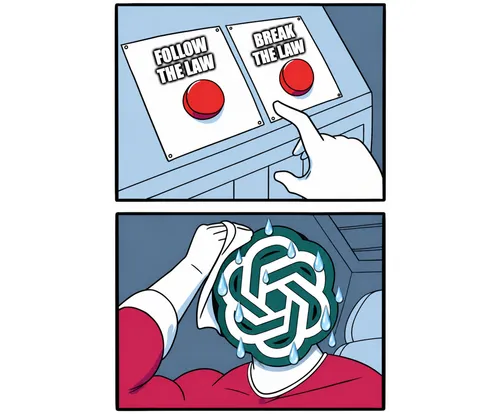
Is it possible then that this week Grammarly, of writing assistant tool fame, are guilty of over-flattery? Or is it more likely that they are guilty of illegal AI-enabled stylistic appropriation?
We're talking of the news this week that Grammarly - now sitting under the umbrella of a business with the wonderfully pompous name Superhuman - has been offering an AI-enabled tool that allows users to have their copy edited and elevated by artificial approximations of Steven King, Neil deGrasse Tyson, and countless other established sector experts and voices, in a feature that sits under the name "Expert Review".
Well, you might think, if they've struck deals with those people, then it's an interesting feature, although of questionable value. However, it doesn't stop there, as it never does with wholesale digital larceny.
All kinds of editors and journalists feature in the "Expert Review" tool, many of whom have been shocked this week to find themselves included without knowledge or permission.
Happily for anyone remotely interested in the possibilities of retaining some diverse and distinctive element of humanity in our collective creative output, one of the writers selected by Grammarly for machine-enabled emulation, Julia Angwin, is not happy about being so emulated, and she has already launched a legal action in the United States against them.
The wording of the lawsuit is suitably acid: "Contrary to the apparent belief of some tech companies, it is unlawful to appropriate peoples' names and identities for commercial purposes, whether those people are famous or not."
"You know, deepfakes are something I always think celebrities are getting caught up in, not regular journalists," Angwin said, "I was just like, are you kidding me?"
There's a lot of people having such "are you kidding" moments currently, as even those creators who consider themselves fair off the mainstream radar are frequently finding some element of their creative output is being utilised without permission.
Backpeddling fast enough to register input on a dynamo, Grammarly have already turned off the Expert Review feature and it's worth reproducing their response to the outcry. Ailian Gan, Superhuman's director of product management, told WIRED: "We built the agent to help users tap into the insights of thought leaders and experts and to give experts new ways to share their knowledge and reach new audiences. Based on the feedback we’ve received, we clearly missed the mark. We are sorry and will do things differently going forward."
I wonder what advice an Expert Review would have delivered prior to this entirely predictable outcome, and whether the people at Grammarly believe they will themselves be quoted as experts one day? Time will tell. You see, they were trying to do a good thing and cruel reality derailed their entirely altruistic endeavour.
I don't know about you, but I'm up to here with this mealy-mouthed corporate speak designed to cover for truly awful conduct. "I tried to pick your pocket in order to free up the contents of your wallet to wider audiences, but I missed the mark and for that, I'm sorry you're upset."
It never stops. There's no sense of embarrassment, never mind one of honour. They try to add value to their product by associating with the reputation and expertise of actual people, therefore a substantive part of the value of doing such sits with those people. It's people, all the way down.
The maddening duality of the current situation around authorship was also illustrated amply this week, by NYT tech writer Kevin Roose, who relayed the finding that, in tests, readers preferred AI-written passages of content to human-authored ones.
Never mind the fact that these were isolated passages and not the kind of coherent larger work that such systems cannot extend to, Mr Roose, possibly playing agent provocateur, declared it "A real moment!".
So, in reality, you have Grammarly putting an AI feature into a skin suit in order to make it popular with users; on the other, all human writing is defunct. I note Mr Roose is currently "writing a book about AGI". Why bother with that, mate? Just tweet us the prompt and I'll get Grammarly to quote what you might have said.
We'll leave you with a wonderful observation about the attitude of some people to AI systems, fully encouraged by those that make them: "Believing Claude finds your questions insightful is like believing the stripper actually likes you."
It doesn't, and it's picking your pocket, and probably selling you stolen goods.
No matter where you are on your CMS journey, we're here to help. Want more info or to see Glide Publishing Platform in action? We got you.
Book a demo
