 Products








Ready to get started?
No matter where you are on your CMS journey, we're here to help. Want more info or to see Glide Publishing Platform in action? We got you.
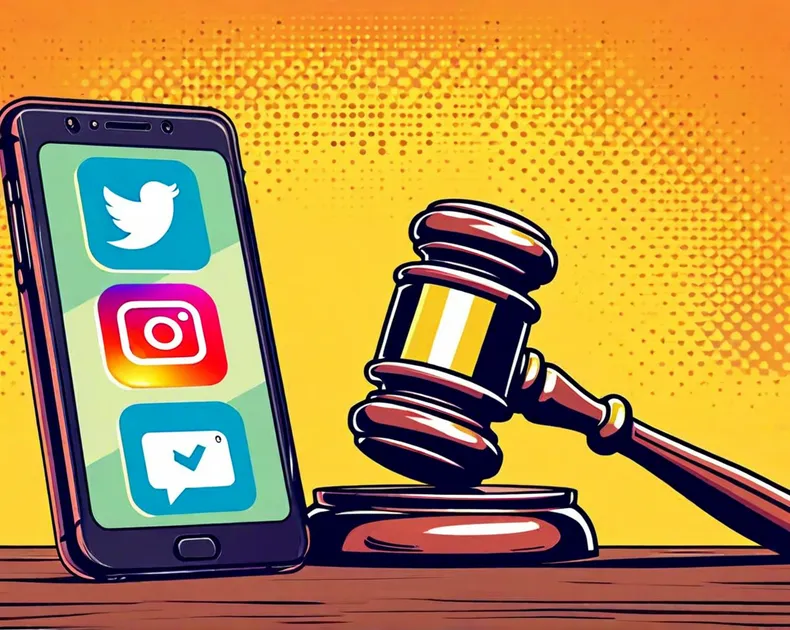
Book a demoCourt cases against social media firms are starting to stick. It perhaps presents a moment for audiences seeing content and those who create it to get back on the same page.
Despite some implicit suggestions to the contrary, the internet itself remains neutral. I say this as a reminder that the data transmission technology that girdles our world and defines some large parts of the activity upon it, is exactly what we, the people, make of it.
The reason for making such a point comes in a week during which two of the world's largest commercial empires, Meta and Google, which both owe their existence to such technology, have been dealt hefty legal blows.
First, jurors in New Mexico found that Meta had violated the state’s unfair practices law, after Attorney General Raúl Torrez built a case that the company failed to properly safeguard its apps from online predators targeting children.
The total penalty of $375m in this case "was reached after the jury decided there were thousands of violations of the act, each with a maximum penalty of $5,000." If each violation represents an affected user, the financial maths are looking bad for Meta if extrapolated across the entire United States. Meta plans to appeal.
Then we had a jury last night in Los Angeles return a ruling that both Meta and Google were liable for the depression and anxiety caused to a young woman who became addicted to their platforms. That jury concluded two tech companies should pay the woman $3 million in compensatory damages and another $3 million in punitive damages, with Meta liable for 70% of the amount. Again, Meta have said they plan to appeal.
In a memorable quote from the LA case, lawyer Mark Lanier stated: "They didn’t just build apps - they built traps."
Content unaware
In both cases, legal attention centred not on the content served by the platform, but instead on the mechanisms by which it was served. An important difference, as platforms have proven adept at avoiding responsibility for content, in a way publishers cannot, by claiming protection under Section 230 of the US Communication Act.
This then, is where the attention economy has taken us, and using all the powers of hindsight granted to me, it seems inevitable that this is where we would end up, as increasingly more intrusive and manipulative methods have been employed to lure billions to keep scrolling. It would be inevitable then that in among these vast numbers of users are those who can be lead astray, who do not develop healthy tech habits, who become enveloped in online worlds that do not serve their ultimate interests.
Yet again, and the crumb of comfort we can offer to our own publishing industry, is that the platforms are not the internet, and the internet is far from a final form. Legal blows that curtail the more invidious eyeball-capturing methods of Big Tech are to be welcomed. I'm not sure this is a "Big Tobacco" moment, but it's certainly something for Zuckerberg and Pichai to put in their pipes to smoke and choke on.
Related to this, in the UK where I am much debate is being had about the possibility of introducing a social media ban for the under-16s, as has been implemented in Australia. To this end, a government-backed trial has been announced in which 300 volunteer families will try a combination of "social media bans, digital curfews, and time limits on apps" in order to gauge the effect of such on minors. This, it must be noted, is from an administration that is also considering lowering the voting age to 16.
If implemented nationally, this could bring about a scenario in which at the stroke of midnight on your 16th birthday, you are suddenly dropped into a world of Communist Cat memes, people setting their arses on fire for clicks, and many, many people offering their opinions on things they know little about. That's quite the drop.
We might be trying to end the era of the "screenager", but the internet literacy the young frequently possess is, in my thinking, a guard against manipulation that someone of my analogue/digital crossover generation can't fully comprehend, no matter how many hours I've spent online gaming.
As the argument would go, just because someone has been beaten to death with a toaster, you don't ban toasters.
A moment - but is it pivotal?
Speaking as the somewhat erratic chairman of a 15-year-old's content consumption committee, I can say it's the relationship you have with the child, and your understanding of them that matters most.
Some degree of literacy about what the various platforms actually are and how they work is useful, but it's the bond of trust between a child and a guardian that remains the single most important bulwark against some of the internet's wilder shores, and I opine as someone who read a Marquis de Sade book at 15.
It is of course not difficult to ascend this view upwards into the role that responsible media creators and publishers can have, and have been able to play, to society at large.
The scale of coverage given to the two verdicts hints at their potential real effects on the major platforms, particularly since there are so many other suits of similar themes stacked behind in other courts. The financial impact of these two specific awards will be unnoticeable to the social media firms, but the real-world impact on how they do things in future could be huge.
I am also interested to see how it might help the publishing and media industry to regain a voice on the power of good and trusted content, a message which in recent years has seemed drowned out by the real-world power of the platforms and their design decisions to bend content to their ends.
No matter where you are on your CMS journey, we're here to help. Want more info or to see Glide Publishing Platform in action? We got you.
Book a demo
