 Products









Ready to get started?
No matter where you are on your CMS journey, we're here to help. Want more info or to see Glide Publishing Platform in action? We got you.
Book a demoThe micropayments twist, bots love a good list, the web splits in half, and the slop suppression begins - all in this week's Content Aware.
Corbidge comments on…can publishers crack video this time
While publishers are producing more video again, this time they are doing it differently: more grounded, more cautious, and building on the success of audio podcasts rather than trying to become broadcasters overnight. The key insight, coming from producers such as Goalhanger and Chora, are that value is not so much in the individual piece of content, but in the relationship that it creates with the audience. Our resident Podcast Provocateur Rob argues that news video has long suffered from one thing: talking at people, instead of talking to people, after all it is a format that rewards authenticity, parasocial trust, and distinctiveness over fancy polish. The beauty of our world is that you can nowadays achieve a lot even without a huge budget, but luck always favours those prepared to experiment, evolve, and abandon when needed.
Read
Be interesting or be invisible
Google's recent definition of "commodity vs non-commodity content" reads like a general list rather than a framework to build within, but the underlying message is clear: if your content is aimed only at SEO and has nothing else to offer, you're throwing your money down the drain. Such "commodity content" is doomed for two reasons: it's easily summarised because it's been done to death, and it doesn't generate revenue in a world revolving around zero-clicks - and we all know that if you aren't generating money for Google, they don't see you. At least the bar is measurable, since Google already calculates document uniqueness using a custom "information gain" score. The solution? Not more pages, but better pages which satisfy scanners, answer seekers, visual consumers, deep readers, and fact-checkers, all at once. Harry Clarkson-Bennett - who will be a speaker at our Glide Live: London event on June 17 - shares more info.
Read
AI agents pick up the tab
In an interview with The Atlantic's CEO Nicholas Thompson, Sam Altman was asked, point blank, how can media companies survive the decline of traditional search and the rise of AI agents browsing on behalf of humans. His answer? Micropayments, but with a twist. Instead of the readers paying, the AI agents are. The model is already being explored by start ups such as Tollbit and Prorata.ai, and just last summer Cloudflare launched a pay-per-crawl marketplace for its 20% share of all websites. These comments could mean a potential shift from the previous licensing deals that have defined OpenAI's relationship with publishers. Whether micropennies per interaction can replace the $80 subscription, time will tell.
Read
Know your audience, all in one place
Publishers typically collect audience data in more places than they realise, but those disconnected systems rarely know it's all one person. Fret not, we've got a solution for you. Glide Nexa connects identity, engagement tracking, entitlements, and first-party data around a single known user in one platform. No stitching together point solutions or spending time and money on building your own hub, and no per-user pricing that punishes growth. It works with any CMS but Glide CMS pairs with it naturally, so every piece of data becomes first-party, fully owned by the publisher, without any dependency on third-party cookies or platform APIs that can change overnight.
Read
The 30-year placeholder finally has a job
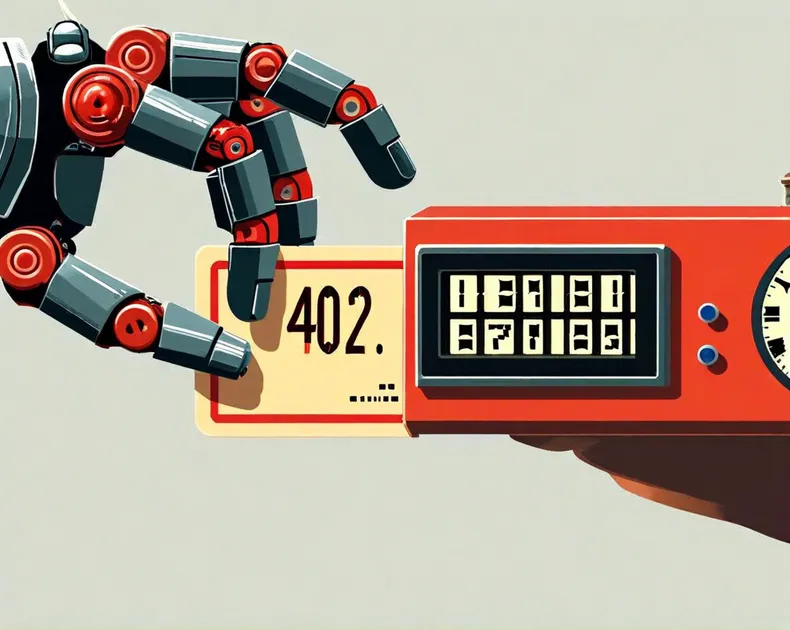
Back in 1997, the HTTP spec reserved the status code 402 for "Payment Required" - and then no one used it for three decades, because humans aren't up for approving micropayments hundreds of times a day. Enter AI agents which instantly can check a budget, pay, and move on. Thus the 402 finally has a job which for publishers opens up a potential third revenue stream alongside subscriptions and ads, of machine-to-machine payments for bot traffic.
Read
Go live or go home
Livestreaming is no longer just a broadcaster's prerogative, as any portable tech means and newsroom can go live. And research suggests they probably should: according to a Northeastern University study of 1,000 young adults, 91% consume local news weekly and two-thirds find it relevant, but not on their TVs. YouTube has led as the most-watched source, with 59% watching news videos there daily. The takeaway for publishers is that young audiences don't care about the polish too much, they're interested in the conversations and the content. Editor and Publisher have more.
Read
Search becomes a spectator sport
Google has revealed their biggest change to Search in 25 years. Now the search box expands for longer, conversational queries and can drop users into AI-powered interactive experiences instead of a list of links. Their new "information agents" can work in the background 24/7 to track web changes and synthesise updates, a sort of Google Alerts made with AI that can make sense of what it finds. The ad and search firm says users will be able to build personalised mini apps from search results - the questions are over whether users will want to do that, and what the impact will be on traditional sites and apps. The changes are rolling out this summer, first to paying subscribers. For publishers already dealing with declining Google referrals from AI Overviews, now they will be facing a world where more bots do the browsing than humans.
Read
Three engines, three different worlds
New data across 3.7 million citations showcases that ChatGPT, Perplexity, and AI Overviews barely overlap. Only 2% of the cited URLs appear in all three engines when the same prompt is used, while 91% appear in just one. That means that one blended "AI visibility" score actually hides more than it reveals: a brand might have high citations in ChatGPT, some in Perplexity, and none in AI Overviews, but when all three are combined into one dashboard, the averaged score masks the fact that that same brand could be invisible in two of the three platforms. Guides and tutorials travel best from platform to platform, but even they only hit 2.3% overlap. For publishers, the focus should be on measuring portability and survivability across different engine preferences, and not presence alone.
Read
Egos on trial
While Elon Musk lost his case against OpenAI because of a technicality, the real takeaway from the Oakland courtroom is broader. Weeks of testimonies exposed not so much of their view of the wider world and their place in it, and more on petty rivalries, giant egos, and personal drama among a small and influential group of people.
Read
No safety, no kids
Leading UK child safety organisations - including the NSPCC, the Molly Rose Foundation, and Smartphone Free Childhood - have written to the country's Prime Minister, calling for a different approach to banning all social platforms to under-16s. Instead, they say, platforms should have to prove that they are safe to be used. Features such as infinite scroll, disappearing messages, and push notifications would be deemed too risky under proposed safeguards.
Read
Who runs the AI search world? Listicles!
According to an analysis of 6,000 most-cited URLs coming from ChatGPT, Gemini, Copilot, Perplexity, Google AI Mode, and AI Overviews, over half are listicles. Across nearly 400 million citations, 63% of them pointed to list-format content, with ranked lists making up 71-86% of all listicles depending on the model. Why? Listicles are tightly focuses, easy for models to parse, and do the comparison work AI answers need. Don't cross out traditional SEO yet though, as pages that rank well in human search tend to get cited by bots.
Read
One strike and you're out
ArXiv, the preprint repository for computer science and maths, has moved to to axe sloppy AI-generated submissions. According to their post, if a paper contains clear evidence the author used AI - such as hallucinated references or leftover chatbot prompts - they face a one-year ban and all future papers require peer-review before submission. You can still use AI tools, but the authors must take full responsibility for what they publish. 404 Media has the details.
Read
Humans: 50%, machines: 50%
After analysing 55,400 URLs, a digital marketing agency has found that the share of online articles written by AI has plateaued at around 50%. Within two years of ChatGPT's launch, it managed to surge up to 48%, but growth is stalling. Fears of a no-human web are somewhat calmed, but researchers warn the web still risks becoming a feedback loop of machine-generated content without any new human insight and takeaways to fuel the AI insight and takeaways.
Read
LinkedIn's AI reckoning
LinkedIn recently announced a crackdown on AI slop posts by suppressing generic posts from recommendations. It's not completely banning them - direct contacts will still see them, but that sounds more like a risk than a reward. The platform claims 94% detection accuracy in early tests, targeting engagement bait, recycled content, and formulaic AI patterns. Only a cynic would point out that LinkedIn has its AI assistant to help generate posts, and is of course owned by Microsoft, a prime OpenAI investor and who is foisting its Copilot "companion" on everyone it can.
Read
No matter where you are on your CMS journey, we're here to help. Want more info or to see Glide Publishing Platform in action? We got you.
Book a demo
