 Products






Ready to get started?
No matter where you are on your CMS journey, we're here to help. Want more info or to see Glide Publishing Platform in action? We got you.
Book a demoIn this guest blog post from Glide technology partner Kordiam, Robert Dönges, Partner and Integration Manager, shares insights shaped by Kordiam’s experience supporting some of Europe’s most respected news organizations.
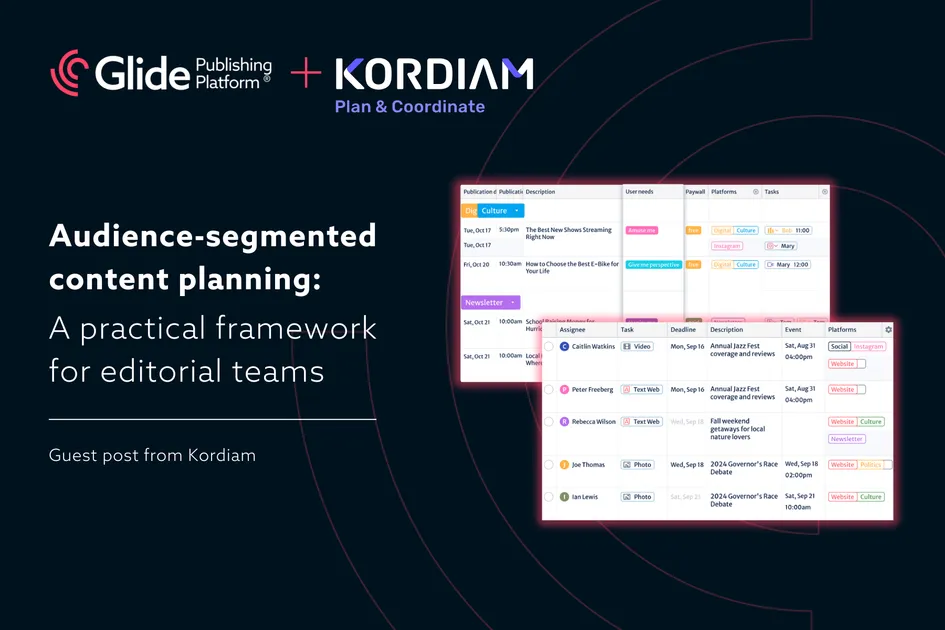
What is audience-first content planning? Audience-first (or audience-segmented) content planning is an editorial approach that decides who a story is for - the audience segment and the user it needs to serves - before the story is commissioned, rather than planning distribution as an afterthought.
Today’s media teams can’t rely on one-size-fits-all planning. In an era where audiences expect content that feels personally crafted for them, the “one-size-fits-all" model is rapidly losing effectiveness. Readers, viewers, and listeners want relevance, and they want it on the platform or device of their choice.
For editorial teams, this shift presents a massive operational challenge: How do you produce bespoke and targeted content at scale without drowning in chaos?
The answer lies in moving away from channel-centric workflows and adopting an audience-first planning framework.
Kordiam works with over 250 publishers including The Times, Süddeutsche Zeitung, Tamedia and Mediahuis, and we’ve seen firsthand how complex and fragmented planning can get. From duplicated efforts to missed opportunities, editorial teams often find themselves navigating a tangle of tools and workflows just to stay afloat. Untangling that planning chaos is at the heart of what we do, and it’s what this framework is designed to help with.
Here is a practical framework for building audience-segmented content plans that streamline coordination and enhance impact.
Traditional workflows often start with a story idea, such as writing about a local event or incident. The distribution plan frequently comes as an afterthought. This leads to generic content that fails to resonate deeply anywhere.
An audience-segmented approach flips this. Before a story is commissioned, the planning phase asks: Who is this for?
Practical Tip: Use custom fields in your planning tool to tag every pitch with a specific audience segment and user need. This ensures editors validate the "why?" behind every story before resources are committed.
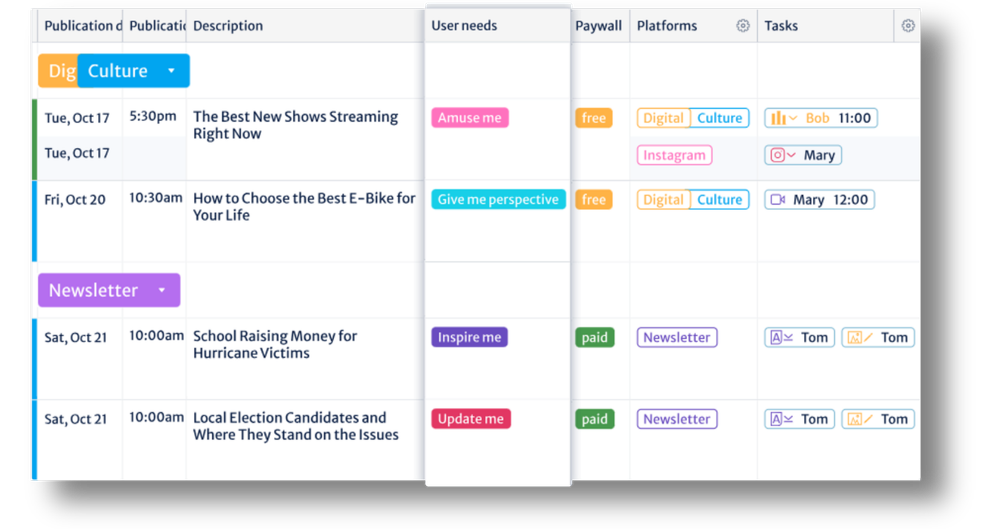
Kordiam Story List
Complexity is the enemy of speed. When teams use disparate spreadsheets, emails, or chat apps to manage different audience segments, silos emerge. The social team may not truly know what the politics desk is doing, leading to duplication and missed opportunities.
A robust framework requires a "Central Brain" or a single source of truth where all content is visible regardless of destination platform.
By centralizing planning in a tool like Kordiam, you empower teams to work autonomously on their specific outputs while staying aligned with your broader editorial strategy.
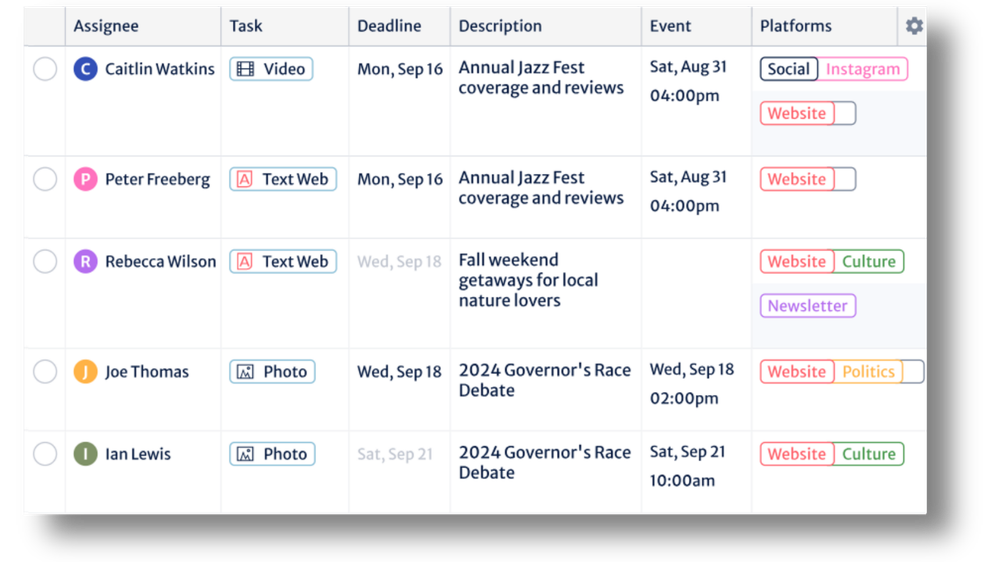
Kordiam Task List
The friction between planning a story and actually publishing it is where most errors occur. Metadata gets lost, instructions are missed and valuable context is buried in email chains.
To make audience segmentation scalable, you need infrastructure that connects your planning tool directly to your CMS. This is where the integration between Kordiam and Glide CMS Publishing Platform becomes powerful.
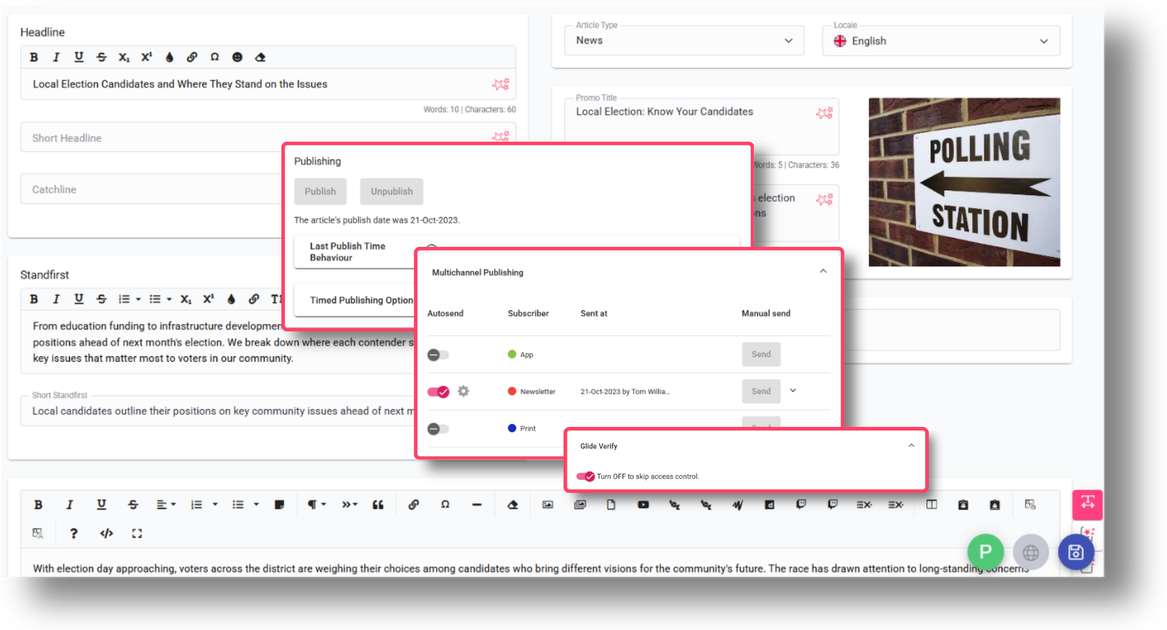
Kordiam-created story as an article in Glide CMS, with story-specific timed publishing, content access, and multi-channel distribution options as planned in Kordiam
Implementing a framework focused on audience segmentation requires more than just a mindset shift. It requires the right tooling.
Kordiam acts as the strategic command center allowing you to map complex, multi-audience plans with clarity. Glide CMS serves as the agile execution engine capable of delivering that content to any channel.
In combination they remove major technical barriers to segmentation. Teams stop fighting their tools and start focusing on what matters, focusing on crafting stories that truly connect.
Ready to streamline your editorial planning? Explore how the Kordiam and Glide CMS integration can support your team.
Kordiam is the leading editorial calendar platform for newsrooms, empowering editorial, broadcast, and communications teams to seamlessly coordinate everything from long-term strategy to daily assignments. Trusted by The Times, Süddeutsche Zeitung, Tamedia, and Mediahuis, Kordiam helps teams streamline planning, stay aligned, and connect their workflows through powerful integrations and an open API.
What is the difference between audience-first and story-first planning? Story-first planning starts with a story idea and treats distribution as an afterthought, which tends to produce generic content. Audience-first planning asks "who is this for?", defining the audience segment and user need before the story is commissioned.
How does an editorial planning tool connect to a CMS? An integration lets planning data flow directly into the CMS. When a story is planned in Kordiam it appears in Glide CMS ready to work on, carrying metadata such as headline, description, author, article type, and publication data, removing double-entry.
How do you scale audience segmentation without adding chaos? Centralize visibility in a single source of truth so every team sees planned content regardless of destination platform, while letting teams execute autonomously on their own outputs.
Related articles:
No matter where you are on your CMS journey, we're here to help. Want more info or to see Glide Publishing Platform in action? We got you.
Book a demo
