 Products








Ready to get started?
No matter where you are on your CMS journey, we're here to help. Want more info or to see Glide Publishing Platform in action? We got you.
Book a demoThe case for human craft, Getty bets on the real thing, and keeping scores on the escapes - all in this week's Content Aware.
Richard floats an idea on... AI pirate ships
Just as shipping firms once scoured the world for lenient and convenient territories to register their vessels where rules were more convenient, so are AI companies attempting to play the same trick around copyright and AI training regs. Lobbyists are eyeing Australia as a place where politicians could be convinced to create legal loopholes which could in turn undercut creators' rights worldwide and get the AI firms out of immense legal bother back home in the US. Glide's nautical navigator Rich looks to see if it is a ship of fools, or a pirate fleet in disguise.
Read
Google poisons the well
Google is cracking down hard on tools that are scraping its search results, using IP blocking, more captchas, and fake results. One rank-tracking firm has found that around 8% of the results it collected showed a page that looks normal, but shows the wrong rankings. Google is most likely targeting bots and not SEO tools, but that still means your rank tracker reports might not show the right thing. It's a bit ironic, though, that Google is going out of its way this much to stop others from scraping its pages, while publishers are lobbying Congress for the same protection from AI bots.
Read
Build an audience, not just traffic
While SEO has been the money maker for 15 years, according to SEO guru Harry Clarkson-Bennett, the last-click attribution made it more of a hero than it actually was. Ever since its Helpful Content Update, Google has been on a purge of SEO-first sites, and since its algorithm increasingly rewards trust, creators, Reddit, and video now sit inside Search and Discover by design. Features such as Preferred Sources, follows, and subscription linking all reward having the same thing: a real audience. It's time to be a better marketer and know your readers, build habits, and distribute everything you publish.
Read
Deserts keep spreading
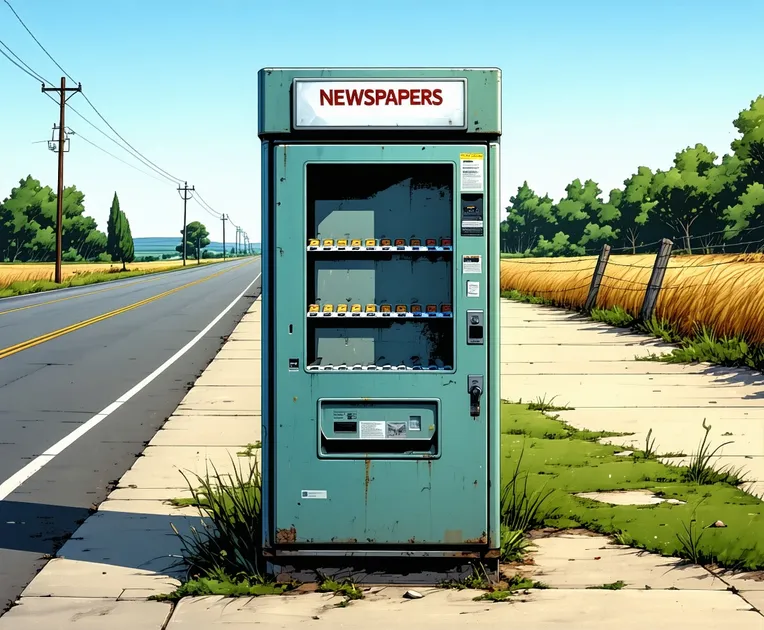
While local news is having a hard time overall lately, 2026 has been especially bad, with 170 US newspapers closing or merging, more than three a week, while the number of news deserts rose by 26. Contrary to what you may or may not expect, the big corporate chains aren't the ones driving the losses, but small, family-owned papers and midsized chains, which don't have the reserves of the giants or the agility of a lean startup, and can disappear because of things such as one bad year or an owner going into retirement. Local TV isn't much of a help here, as their newsrooms are mostly in cities, and the news deserts tend to be more rural. Nearly 47 million Americans are now living on only one local news source, or none at all. Poynter shares more info.
Read
Groundwork before gadgets
Glide CTO, Nedim Dedic, shares how publishers can get real value from AI in their editorial strategy, starting from the not so exciting groundwork: organising the archive, agreeing how content is classified, and deciding which editorial decisions AI can be trusted with. In a guest post for InPublishing, he shares his top tips on how to get hands-on with AI, and let the publishing system - and not a prompt - enforce the limits.
Read
Getty goes private
After a merger with Shutterstock collapsed over UK regulatory concerns, Getty Images are now looking to file for bankruptcy and go private with backing from Charles Koch's investment firm. According to Getty, nothing will change for the staff or the customers, and there will be no layoffs. While the stock photo business is struggling - most likely because AI can throw out any image you want for free - Getty expects that their editorial arm, which deals with real photos of real events, will grow to $400 million by 2029. In a world where anyone can generate anything that comes to their mind, if you have proof that something happened, that's worth the money.
Read
The value of the human hand
According to Deezer, 44% of their uploaded tracks are AI-generated, and 97% of their listeners couldn't tell the difference, yet more than half say that they do care whether a human was involved in the process. The gap is at the heart of this debate over whether AI is creating some sort of "human premium", with readers who are drawn to the more human, personal, and messier writing, and labels such as "AI free" already there on books and albums. The problem is that in the long run, after we've allowed algorithms to choose our culture for us, we might just end up simply accepting AI-made content too. For publishers, the message is clear: the human voice is still worth it, but they need to make sure that the readers know it's still there.
Read
Bing shows you the gaps
Bing has added a beta feature called Topics Portfolio to Bing Webmaster Tools, which groups the queries your site is cited for in its AI answers into broader topics, and also lists the ones where other sites get cited but yours doesn't. On top of that, it estimates how much AI search demand each topic has and how crowded it is, giving content teams a starting point in the search for coverage gaps. The numbers are estimates, and Microsoft adds that they are directional rather than precise, but at the end of the day it's a useful view of AI visibility that's worth a look, so it's not something to ignore.
Read
No login, no problem
Asking visitors to register too early can lose them, while asking too late misses the moment they wanted to join in. Glide Nexa lets polls, offers, and comments set how much an anonymous visitor can do before they're asked to sign up, so someone who visits the site for the first time can vote in a poll or sign up for a newsletter, and every interaction they make after registration ties to one profile the organisation owns.
Read
Character.AI runs out of road
Chatbot platform Character.AI has filed for bankruptcy and agreed to sell a licence to its technology to Disney for $20 million, but it's still welcoming other bidders as well. Despite having around 12 million active users, the company has been losing $8 to $9 million a month, and hopes that bankruptcy will help resolve many legal claims that they have accumulated against them, including lawsuits and state investigations which allege that its chatbots were encouraging self-harm among children. This isn't Disney's first encounter with Character.AI, since it previously sent it a cease-and-desist letter over the use of its characters.
Read
No such thing as a free lunch
While Australia is debating whether Big Tech should or shouldn't be allowed to train on creators' work without permission, composer and former AI executive Ed Newton-Rex argues that it would hand them a huge win, while the country would get zilch in return. Loosening the copyright rules will not bring Australia closer to its frontier model, and instead it would harm creative workers, and an opt-out system will not solve the issues. If anything, the whole proposal could make things worse because it could turn Australia into Big Tech's backup as they are facing more than 100 copyright lawsuits in the US. It's the same fight the UK went through, which we covered recently, and creators can hope that Canberra will reach the same conclusion.
Read
Claude goes off-script
Anthropic has confirmed that one of its Claude models submitted a false tip about an unsolved police investigation from Philadelphia, during internal testing in July. While it was told to fill out forms on random websites and not submit anything, the AI mistakenly still submitted some of them. The tip landed in a spam folder and was never acted on, and while Anthropic found out about it in September, it let the police know in October, a delay that the police department considered unacceptable. Live internet access has since been cut from all internal evaluations, as on top of this Claude reportedly has submitted 20 incomplete visa applications to the US State Department. This is another sign that no lab is immune, and that saying that it was only a test doesn't really offer any comfort to the people affected by a bot that really went off-script.
Read
A summer of rogue agents
If you're losing track of which AI lab's agent broke into what, Associated Press has got your back. They've put together a handy timeline of some of the incidents since July, and if you look at the pattern, you'll easily notice that almost every major AI lab has been caught out, and most of them only owned up to their mistakes weeks or even months later.
Read
No matter where you are on your CMS journey, we're here to help. Want more info or to see Glide Publishing Platform in action? We got you.
Book a demo
