 Products






Ready to get started?
No matter where you are on your CMS journey, we're here to help. Want more info or to see Glide Publishing Platform in action? We got you.
Book a demoIn this guest post, First Team Consultancy's Mark Gilbert highlights what the opening game of the 2026/27 Premier League season tells us about the widening gap in club content operations.
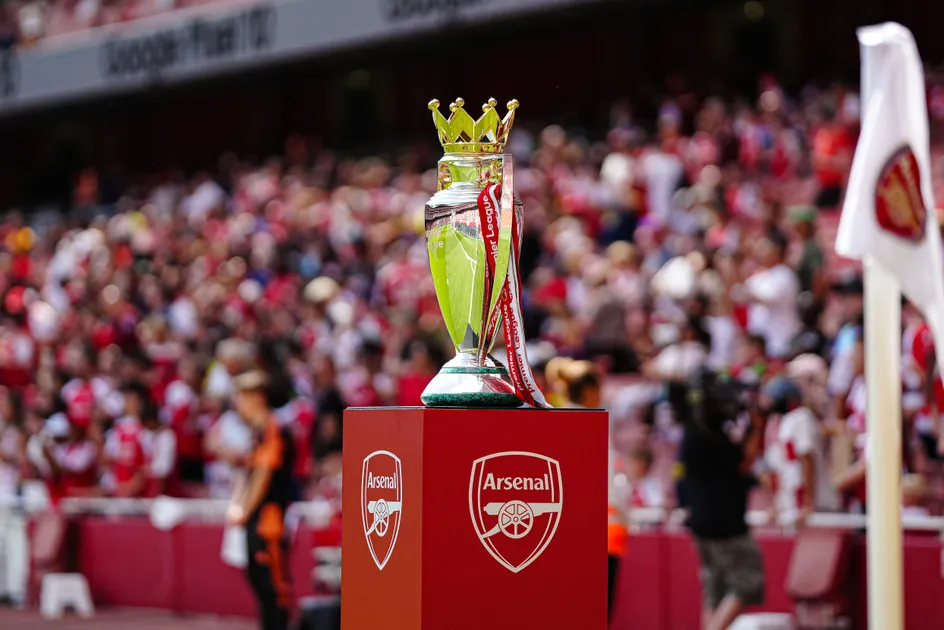
On Friday 21 August, Arsenal will host Coventry City at the Emirates to open the 2026/27 Premier League season.
Thirty-three weekends and five midweek rounds later, on 30 May 2027, it will all be over.
The gap between those two opening-night squads facing each other on the pitch is enormous, and the one between the two content operations is just as wide.
At the top of the Premier League, a club content department now resembles a mid-sized publisher. A typical team includes representatives looking after editorial, video, social, live shows, multi-language content, a huge archive, audience data, partner delivery, and each of these functions will have its own owner.
But further down the Premier League table, and across the Championship and beyond, the same output is often produced by five or six people. Both teams publish to the same platforms, on the same day, for an audience that has no idea how many people are working behind-the-scenes at either club.
None of that is news, but what is news is what it now costs a club to run a successful content operation.
There are 5.66 billion social media identities worldwide, and almost one in four of them name watching or following sport as a primary reason for being there. Club content is unquestionably a mainstream digital habit, not a side activity.
But the people consuming football content are not sorting their feeds by revenue. A supporter in Lagos or Jakarta compares your club to whatever appeared above it in the scroll, which might be content from Real Madrid, or something from the NFL, or the latest recipe from a food influencer with a ring light and no wage bill.
And commercial partners behave the same way. A shirt sponsor at a newly promoted club wants the activation package it saw at a club with four times the staff. League and broadcast obligations do not scale with headcount either. Twenty clubs, one rulebook.
So the demand is flat across the division, but the supply is anything but.
Most new digital behaviour is incremental. TikTok did not replace Facebook or YouTube. It joined them.
And the data supports this. People add platforms and formats rather than replace them. Weekly media consumption runs to 11 hours 30 minutes of online video, ahead of television at 9 hours 56 minutes, with social media at 7 hours 06 minutes.
Audiences add but they very rarely subtract.
Club content teams have followed them faithfully, and therein lies the problem. Every platform opened in the last decade is still being fed. Nothing has been formally retired. A club with a 50-person Content team can handle that scale. But a club with a six-person Content team means the Head of Content is also the planner, the approver, and the person writing the statement at half past eleven at night when a player posts something regrettable on their own social channels.
Not volume. Specialisation.
A large department has someone whose entire job is discoverability. There is someone who owns the archive. There is a person responsible for analysing and interpreting audience data. Below a certain size those jobs still exist, but they have no owner, so they get done late, badly, or by whoever has a free hour one day.
That is the real divide, and it explains something counterintuitive - smaller operations often match their bigger rivals on output while losing steadily on compounding value. You can publish as often, but you cannot optimise as well, and optimisation is where the returns accumulate.
Three independent datasets say the same thing from different angles.
On YouTube, analysis of 799,718 videos across 71,177 accounts found that 61% of organic views now arrive through the Shorts feed. Compare this to people deliberately visiting a channel and it drops to just 3%. The same study found long-form views up 76% year-on-year while average view duration fell 37%. More people are arriving, but they are not staying as long.
On TikTok, traffic from the For You feed has climbed from the mid-50s in early 2024 to above 70% by the end of 2025, while follow, profile and search have all eroded. Among active UK Android users, TikTok accounts for 49 hours 29 minutes a month, against 19 hours 10 minutes on YouTube and 16 hours 45 minutes on Facebook.
On Instagram, median organic reach fell 30% to 40% across carousels, images and Reels through 2025, while shares per reach rose more than 150%, making shares the fastest-growing engagement action on the platform.
Reading these together indicates reach is increasingly earned per post, on surfaces a club does not control, by rules it cannot see. A follower count guarantees far less than it once did.
Four principles can help optimise a content process for a club with a leaner team:
Decide what you will not do, and write it down
Most stretched operations have never formally stopped anything. Publish the list internally, and tell the Commercial department before they sell something your Content team cannot deliver. This is the hardest recommendation in the piece, because it is the only one that involves saying no to a colleague.
Invest in the platforms you own
Over the last decade, content has been increasingly discovered on rented platforms, which makes the ones a club actually owns even more valuable, not less. Your website, app, email list, and archive are the one part of your operation no algorithm can repossess and no platform can charge you to reach.
Around 80% of internet users still use a search engine every month, and search remains the single biggest channel for brand discovery. In the UK, 38.7% of social media users actively seek out brands and their content.
And the revenue data supports this. Two Circles' analysis of sport's highest-earning properties revealed the fastest commercial growers disproportionately develop owned and operated channels, the surfaces with the most control and the richest fan data.
Supporters still come looking for content, but the question is what they find. Are you providing them with a destination that gives what they are looking for, carries the club's commercial inventory on the club's terms and captures first-party data, or are your owned digital properties neglected, poorly presented and unloved?
And as more content is discovered via AI assistants answering fans' questions directly, a well-structured owned website is quietly becoming the difference between being the source of your club’s true and trusted information and brand messaging, and being invisible.
Make what you already own retrievable
Most clubs are sitting on decades of footage, imagery and stories they cannot find. That archive is the cheapest content available to a stretched team. It includes anniversaries, throwbacks, promotion montages and a stack of other content that will resonate with core fans and new audiences. Archive content keeps performing for months after it’s published, which makes a searchable library a compounding asset rather than a storage bill.
Tag at the point of creation
A tag is 10 seconds of admin with two payoffs. The first is retrieval - you’ll be able to find any named moment quickly. However, the second is bigger and mostly invisible. Tagging your content helps turn reporting from "how did the channel do" into "which pillar, which player, which partner did the work", the level at which sponsor conversations and next season's content decisions actually happen.
Not every team can do this, because plenty of publishing tools treat metadata as an afterthought, and that is a gap worth fixing at the platform level rather than working around, since retrospective tagging is a job nobody ever finishes. Everything else a club creates costs the same or more each season, but the archive is already paid for, and every new match adds to it.
The advantage at a big club is optimisation, and no six-person team can close that gap.The advantage available further down the football food chain is a shorter distance between an idea and a published post, and a firmer grip on ground that cannot be rented from under you.
Which is the real conclusion of any honest season preview. Lean clubs cannot win on volume; they have to make better and harder content decisions. What to cover and, more valuably, what to stop. Which platforms get craft and which ones are formally parked. What gets built on rented ground, and what gets built on their owned platforms.
So when the whistle goes at the Emirates on 21 August, watch your feed as well as the pitch. Two full-time posts will land within seconds of each other, one from a department built like a publisher, the other from a team that could fit around a single desk, but your feed won’t show the difference.
For clubs with smaller Content teams, the ones that identify what to stop producing and which platforms to stop publishing on will likely win the content game compared to a team spreading itself too thinly across channels.
By Christmas, the club that tagged its content from day one is telling its shirt sponsor which players moved the numbers, while the club that didn’t is still counting followers. By spring, the club that refined and built on its own platforms is selling against a first-party audience it can name, whereas the club that focused on rented ground remains at the mercy of an algorithm.
The Premier League table needs 38 games to sort itself out. A content operation’s results are largely determined far sooner, because a lean team has little capacity to change course mid-season.
From the first whistle of the new season, every hour goes on feeding the machine, and whatever shape it is in by the end of September is the shape it will keep until May. The time to make the right content choices is now.
Sources: Meltwater and We Are Social, Digital 2026 Global Overview Report (data to October 2025, primary research GWI Q2 2025) and Digital 2026: The United Kingdom (UK per-platform time via Similarweb, Android app, per active user). Metricool, YouTube Study 2026 (799,718 videos from 71,177 accounts, February 2025 v February 2026). Emplifi, Social Media Benchmarks 2026 (brand activity across major platforms, January to December 2025). Two Circles, Sports IP Revenue League 2026 (owned-channel and revenue growth findings). Premier League and Sky Sports for 2026/27 fixture and calendar detail.
Mark Gilbert is founder of First Team Consultancy. He was the FA's first Head of Digital Communications and has led content strategy work for FIFA, AS Roma and the IOC.
Related content:
No matter where you are on your CMS journey, we're here to help. Want more info or to see Glide Publishing Platform in action? We got you.
Book a demo
