 Products








Ready to get started?
No matter where you are on your CMS journey, we're here to help. Want more info or to see Glide Publishing Platform in action? We got you.
Book a demoA registration wall only asks readers to identify themselves - it does not require them to pay. For sites experimenting with hybrid subs models and bridging the gap between unknown readers and paying subscribers, it’s a powerful third option. Glide Nexa ties every interaction after registration ties to a single known user to for highly valuable first-party data profiling of even unknown users.

Most content teams are obliged to think of content gating in quite binary terms: free, or paid, with a reader or being either all in, or not in at all. It’s not very subtle.
But there is a third option which changes the picture without changing the revenue model out of recognition for either party: a registration wall which asks for an email, but not money. Content remains free, but a user has given you a major signal of confidence in wanting more - and some useful insight your commercial team can work with.
The gap between an anonymous visitor and a known reader is where audience strategies can fall apart. Analytics can tell you that someone visited, but of course not who they are, if they ever come back, and if they visit you on different devices.
A registration wall closes that gap, and in a post-cookie environment that is a huge deal for commercial teams: analysis of live Prebid auction data by IAB Europe and ID5 found that CPM win rates for media and publishing sites using cookieless identity signals rose a staggering 365%, alongside far higher bid density on the same inventory.
A registration wall gates content behind an account creation step, in this case unpaid. The reader provides an email address (and optionally other details), confirms their email, and gains access. No payment is involved, and the content remains accessible once the reader is authenticated.
In practice the reader’s experience is light. They click into an article, see a prompt asking for an email to keep reading, enter it, confirm, and continue on to the content they want to see. They are never presented with a payment step or have to consider what plan to choose. On the next visit, if they chose to stay logged in, there is no wall. It should take no more than a few seconds, which makes placement and timing imperative.
While a registration wall is not a paywall and does not generate subscription revenue directly, it can block content and manage sharing depending on how you want it to work. Registered readers can still share links for free, with a registration request then presented to the recipient, or they can be allowed to see some or all of the content, perhaps on a timer. This gives you flexibility to experiment with audience appetite without having to reconfigure all your payment options and integrations too, without the conversion friction that a paywall introduces.
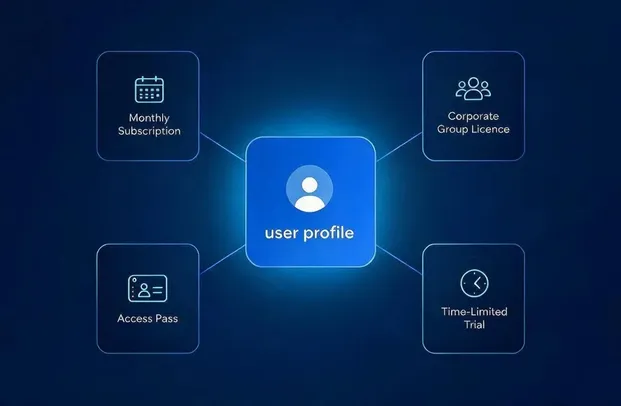
From the moment someone registers, every interaction they have with the site ties to a persistent identity. Their reading patterns, topic interests, engagement frequency, and content preferences accumulate into a profile that grows richer with each visit.
A site with 500,000 monthly unique visitors knows less about its audience than a newsletter operator with 5,000 subscribers. The newsletter operator has names, email addresses, open rates, click patterns, and topic preferences. The site owner has aggregate numbers and session-level guesses.
Anonymous traffic creates three specific problems.
First, you can’t build a reader profile over time. Every visit starts from zero. A reader who has visited 40 times this month looks the same as someone arriving for the first time, because there is no persistent identity connecting those sessions.
Second, you can’t segment with confidence. Without identity, segmentation relies on inference: which pages were viewed, how long the session lasted, what device was used. These are proxies, not facts, they decay quickly and can’t be validated against a known person.
Third, you can’t prove audience value to advertisers. Advertisers pay a premium for authenticated audiences because they are reaching real people with known characteristics. As third-party cookies decline, advertiser budgets continue to shift towards authenticated, consented audiences, which leaves anonymous traffic as commodity supply.
The shift from anonymous to known brings into reach actions that were previously impossible or unreliable. Instead of aggregated pageviews, you get individual reading histories. You can see that a specific reader visits three times a week, reads primarily about technology, and engages most with long-form analysis. That information is useless at the session level but actionable at the profile level.
Registered readers can follow topics and authors, creating explicit preference signals. These are declared interests, chosen by the reader, which are more reliable than interests inferred from browsing behavior. They can save articles, telling you directly what they value enough to return to.
A registered reader who also subscribes to the newsletter, participates in polls, and leaves comments is one profile rather than four disconnected data points in four separate systems. Email platforms pull identity from the same source, commenting systems tie posts to known users, and poll participation logs against real profiles. The result is a consolidated first-party data set rather than fragmented signals scattered across platforms that do not communicate.
On the commercial side, the same identity pays off. Organizations with a functioning identity layer can pass audience segments into their ad serving infrastructure, activate those segments for deal targeting, and present advertisers with verified, consented audience data that supports premium pricing.
Not all content needs to sit behind a registration wall. Most sites apply a selective approach, and the placement decision is as important as the decision to implement a wall at all.
High-value content works best behind the wall, particularly where readers have already demonstrated intent. If someone has scrolled to the third article in a session, or clicked through from a newsletter, or arrived on a deep analysis piece, the friction of registration is lower because the reader is already invested in what you offer.
Discovery content typically remains open. Homepage, section fronts, and breaking news allow new readers to understand what the site offers before being asked to register. Gating too early on a first-touch visit from an unfamiliar referral source can suppress the session data you need to determine whether that reader is worth pursuing.
Many teams gate after a threshold: the third article in a week, or the second visit in a day. This ensures the wall appears only to readers who are already returning, which means conversion rates are higher and the friction is applied to people most likely to see value in creating an account.
The decision is editorial and commercial, not technical. With the right platform, the gating logic is configured through the CMS and audience layer. Changing what is gated, when the wall appears, or what information is collected at registration does not require a development ticket.
The wall itself is the smallest part of the strategy. What matters is what happens after it.
Once a reader registers, the organization can:
Each interaction is recorded with its type, intent, timestamps, and the content item it relates to. Engagement analytics generate automatically: weekly and monthly snapshots, breakdowns by interaction type, time-of-day patterns, top-performing content, and per-user activity summaries. None of this is possible with anonymous traffic.
For any business building a first-party data strategy, a registration wall is the most direct path from anonymous traffic to addressable audience. Newsletter sign-ups, social logins, and progressive profiling can supplement it, but the registration wall is the mechanism that converts an unknown visitor into a known reader at scale.
Registration inherently involves consent. A reader who creates an account is opting into a relationship with the site. This gives the organization a clear legal basis for data collection that does not depend on tracking pixels, third-party cookies, or browser fingerprinting.
As browser privacy controls become more restrictive and third-party signals degrade, organizations that built their audience understanding on external data are watching the foundations erode. A registration wall builds audience knowledge on your own platform, through your own interactions, tied to your own authenticated users. The data is first-party, fully owned by you, with no dependency on external platforms you don’t control.
Under GDPR and similar frameworks, data collected through registration has a clearer legal standing than data collected through passive tracking. The reader provided it voluntarily, knows it is stored, and can manage it through their account settings. For teams operating in regulated markets, this reduces compliance risk. Because the relationship is account-based, it cuts both ways cleanly. A reader can exercise their right to erasure through the same account, and you can honor deletion or export requests against one known profile rather than hunting fragmented data across systems.
A registration wall creates friction. Some percentage of readers will leave rather than register, and this is the central trade-off: you lose some volume in exchange for knowing who your remaining audience actually is.
For most sites, the readers who leave at a registration wall are unlikely to become paying subscribers, loyal readers, or commercially valuable audience members. The wall is a filter and what passes through it is more valuable per user than what bounces.
The key is placement and timing. A wall that appears too early loses readers who might have registered on their second or third visit. A wall that appears too late misses the window where the reader’s intent is the highest. Testing different thresholds (article count, visit frequency, content type) is essential to finding the right balance for your specific audience.
Glide Nexa provides the identity and authentication layer for registration walls. It handles SSO, social sign-ins (Google, Apple, Facebook, and others), MFA, and configurable password policies. Teams configure what information to collect at registration and can expand the profile over time through progressive profiling, asking for additional details at natural touchpoints rather than demanding everything upfront. Because the gating logic lives in the CMS and audience layer rather than in code, a team can stand up a wall and start collecting profiles without a development cycle.
Once a reader registers, Nexa creates a persistent user profile. Every subsequent interaction, whether it is a like, a save, a poll response, a comment, a newsletter sign-up, or a content purchase, ties to that profile permanently. The engagement data accumulates into per-user activity summaries covering the current week, the last 30 days, and all time.
Nexa is the identity hub at the center of an organization's audience-facing stack. It connects to email platforms, commenting systems, poll services, payment providers, and analytics. Each connected system reads from and writes to the same user profile, which means the registered identity is available across every audience touchpoint rather than siloed in one place.
For organizations already running Glide CMS, Nexa integrates natively. For those on other platforms, Nexa deploys standalone with no CMS dependency, connecting via REST API to whatever content and audience infrastructure is already in place.
To explore how Glide Nexa can provide the identity layer for your registration wall strategy, connect with a Glide product specialist.
Common questions
Does a registration wall affect SEO? No. Search engine crawlers are not gated by the registration wall. Content remains indexable and discoverable through search. The wall appears only to human visitors who have not yet registered.
What information should I collect at registration? Start with email addresses only. Every additional field reduces conversion rate. Progressive profiling will collect more over time: name, topic preferences, location, and organization can all be gathered at later touchpoints when the reader has already invested in the relationship.
Will I lose traffic? Some, yes. The trade-off is fewer anonymous visitors in exchange for more known readers. The net revenue effect is typically positive because authenticated inventory commands higher CPMs and the first-party data feeds every part of the commercial model.
Can a registration wall lead to subscriptions later? Yes, registration is a natural precursor to paid conversion. A reader who has registered, built a profile, followed topics, and engaged regularly is far more likely to subscribe than an anonymous visitor seeing a paywall for the first time. Many media brands treat the registration wall as the first step in a conversion funnel that leads to subscription over weeks or months.
What happens to a reader’s data if they leave? Because everything ties to one account, a reader can update or delete their data through their own settings, and you can honor erasure or export requests against a single profile.
Related articles:
No matter where you are on your CMS journey, we're here to help. Want more info or to see Glide Publishing Platform in action? We got you.
Book a demo
