 Products






Ready to get started?
No matter where you are on your CMS journey, we're here to help. Want more info or to see Glide Publishing Platform in action? We got you.
Book a demoGlide Nexa manages entitlements, subscriptions, and content gating in one audience platform, so media firms gating content can cut costs and improve engagement.
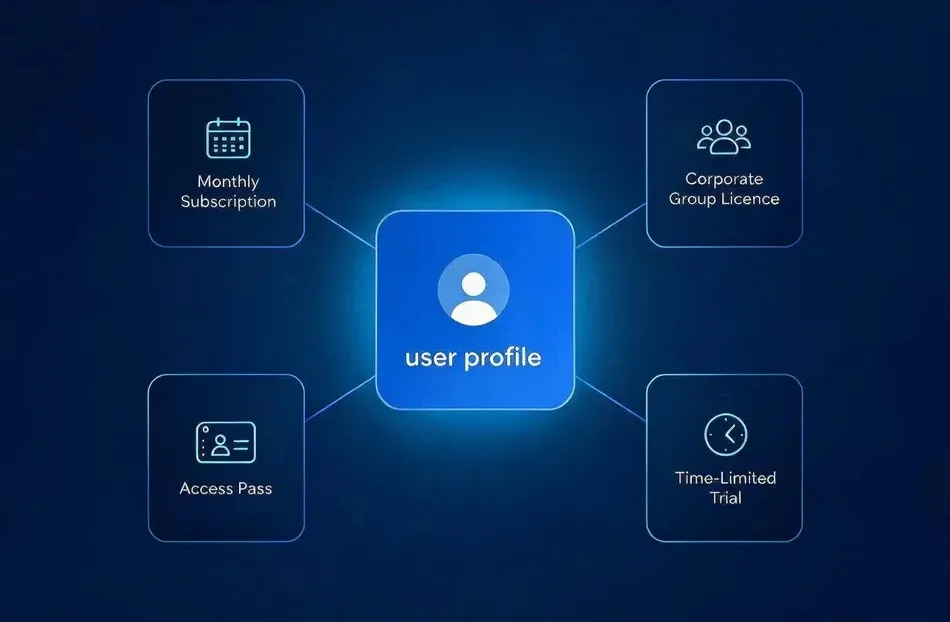
For content businesses of all sizes dealing with free or paying audiences, an entitlement is any rule that grants a reader or user access to content, be that a segment of a site or app, a paid subscription, a corporate licence, a sponsor-backed pass, or a time-limited trial.
As audiences and channels have become fragmented, media and publishing companies now manage more access rules than ever. But most do so by assembling a compendium of tools that have to be plumbed together to share data,or they cannot share data at all, so separate systems and manual intervention fill the gaps.
Glide Nexa manages all of the moving parts as configurable, time-bound rules on a single user profile, covering off entitlement management, subscription logic, and content gating in one audience platform where identity and engagement already live.
The word “entitlement” in publishing or producing content usually gets used as a synonym for “subscription status”, but it covers far more ground than that. A sponsored access pass is an entitlement, a corporate group licence, or a time-limited trial triggered by a newsletter sign-up. Most publishers already manage several of these, often without a single system that knows about all of them.
Entitlements in Glide Nexa are designed around this reality. They’re configurable, time-bound, group-aware, and tied to the same identity layer that tracks every audience interaction, from article saves to poll responses to newsletter opens.
In a typical setup for a media or publishing site, an IDAM service handles login but doesn’t manage subscriptions. A CRM stores customer records but can’t be used as a customer-facing platform.
A paywall vendor gates content but doesn’t know what other access a reader might have through a corporate deal, a sponsor arrangement, or a promotional offer. A newsletter platform manages its own sign-ups but doesn’t connect to the subscription system or the CRM.
As Glide CPO Rich Fairbairn has put it in a Q&A with State of Digital Publishing: “You have multiple systems that deal with the customer, but don’t have a user preference store. Or you can’t programmatically do progressive data capture. Maybe your newsletter service can do sign-ups OK, but not comment or reply, and so on. This keeps adding to a disjointed experience for the user, and you spend more time managing platforms rather than innovating.”
The result for entitlements specifically is that access decisions end up scattered across the paywall, the CRM, and whatever spreadsheet tracks who got complimentary access for a partnership deal. When something goes wrong, whether a reader loses access they should have, a trial doesn’t expire on time or a corporate user can’t reach content their company is paying for, fixing it means digging through all of them to find the broken logic.
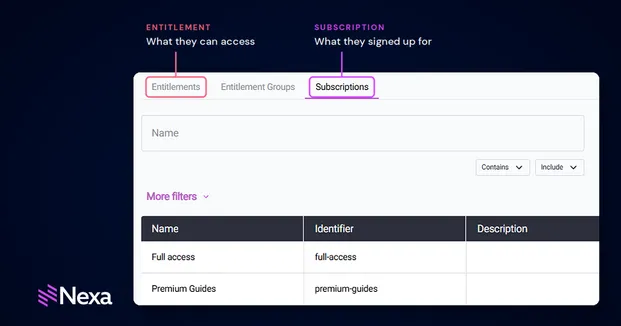
An entitlement in Nexa is a configurable access rule attached to a user profile. Each entitlement has a start date and an end date, belongs to a defined subscription type, and can be bundled into access groups.
These aren’t rigid categories hard-coded into the system, site owners define their own entitlement types and structures, with configurable field types, validation rules, and display settings that match how their products and audience tiers actually work.
This means an entitlement can represent:
The same system handles all of them because the underlying model is flexible enough to accommodate different commercial arrangements without custom development for each one. Adding a new entitlement type or adjusting an existing one is a configuration task, not a development project.
Entitlements connect to Nexa’s Group system, where audience members are grouped by role, tier, or relationship. Groups can represent loyalty tiers, beta testers, event attendees, advertiser-defined segments, or any other classification a site owner needs.
Bundled access groups let site owners package content rights together. A “Premium Sport” bundle might grant access to live match commentary, post-match analysis, and exclusive transfer reporting as a single entitlement. A corporate licence might grant an entire research team access to a specialist archive.
In each case, the entitlement is a single configured object in Nexa, not a collection of manual exceptions maintained in a spreadsheet or a set of hard-coded rules in a paywall vendor’s system.
Because groups and entitlements are part of the same platform, they interact naturally. A user can belong to multiple groups simultaneously (premium subscriber, beta tester, and corporate account), and their combined entitlements resolve without conflict. When a group entitlement expires, access adjusts automatically for every user in that group.
Where entitlements become practical rather than administrative is at the point of content delivery. The access rules stored in Nexa are only useful if they’re enforced when content is actually served to the reader.
As a good example, a financial markets data provider uses Glide CMS and Glide Nexa together to send subscriber briefings across dozens of specialist products daily. Editorial teams curate a single briefing edition, but two readers on the same briefing list may receive different article sets depending on what their subscription tier permits.
Editors don’t need to think about who can see what, or create multiple versions for different access levels. They curate once, and Nexa resolves entitlements at delivery time, filtering content per user based on their subscription status. The targeting decision is made by selecting a taxonomy (the same action editors perform for any piece of content), and Nexa handles the entitlement resolution in the background.
This pattern extends to web content through Glide Verify, a server-side content gating layer that sits between the CMS content API (Connect) and the front-end. Verify validates entitlements and strips protected content at the API response level before it reaches a browser or bot. Because this happens server-side, protected content is never present in the HTML, with the handy benefit that scrapers and AI bots can’t access it either.
Admins configure Verify’s gating rules from within the standard Glide CMS interface. The controls include:
Verify is a standard feature within Glide CMS, not an extra. For users already using Nexa for audience management, Verify uses Nexa’s entitlement data directly for its gating decisions. This connects “who has access” (Nexa) to “what content gets delivered” (Verify).
As a result, content teams produce and organise content once. Access logic is separate from editorial workflow, applied at the infrastructure layer rather than requiring editors to manage multiple versions or manually tag access levels.
What makes Nexa’s approach useful is that entitlements sit on the same user profile as identity, interaction history, preferences, group memberships, and engagement data.
Entitlement status can inform other parts of the audience experience, and other parts of the audience experience can inform entitlement decisions.
Targeting content and features by entitlement is one example. Nexa’s polls feature lets admins define targeting rules based on entitlements, subscription status, preferences, or group memberships. These rules combine with AND logic, so a poll about premium content satisfaction can be set to only appear for users with active premium subscriptions, while a feedback survey about morning newsletters only shows for users who receive them.
A sponsor-branded prediction poll could target users in a specific geographic region who follow a particular sport. The targeting uses what Nexa already knows about each user, without requiring separate audience lists or manual segmentation.
Entitlement data also feeds into commercial operations. Because Nexa’s identity layer is accessible via API, downstream systems (ad servers, email platforms, analytics tools) can distinguish between free readers, registered members, and paying subscribers.
With this in place, ad sales teams suppress acquisition campaigns for existing subscribers, target upsell messaging to engaged free readers, and achieve premium CPM tiers on subscriber-only inventory.
In the other direction, engagement data recorded against the same profile can inform entitlement actions. Nexa captures engagement signals that trigger campaigns for at-risk subscribers or upgrade prompts for free readers whose behaviour suggests they’d convert.
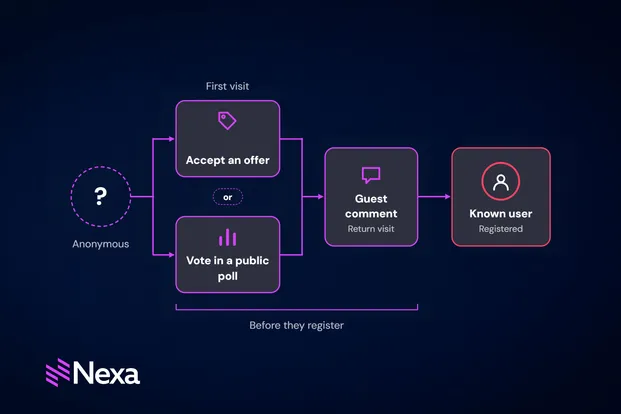
Our expert guide, Audience Polls for media sites: How Glide Nexa turns reader responses into first-party data, describes a scenario where a sports editor runs a weekly match prediction poll, Nexa records which users participate and how often, and those users can then be grouped into segments like “active football fans” or “engaged 3+ times a week” and served a targeted offer for an upgraded subscription package.
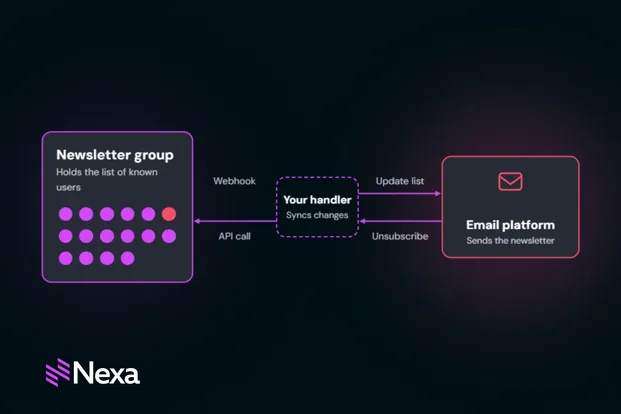
Entitlements don’t exist in a vacuum. They connect to payment providers through Nexa’s API, so subscription status stays current without manual reconciliation. When a payment fails or a subscription lapses, the entitlement expires and access rules adjust automatically. When a user upgrades, new content becomes available without delay.
This matters operationally because it removes the gap between “payment received” and “access granted” that plagues subscription-based businesses using disconnected systems. If the payment provider and the content gating system don’t share a common identity layer, there’s always a window where a reader has paid but doesn’t yet have access, or has cancelled but retains access longer than intended.
With Nexa managing both the entitlement record and the identity, the lifecycle is handled in one place.
For publishers running multiple subscription products or tiers, this also means a single source of truth for access. A reader who subscribes to a news product and later adds a sport add-on doesn’t end up with two separate accounts or conflicting access records. Both entitlements attach to the same profile, and both resolve correctly at the point of content delivery.
When entitlements are managed separately from audience data (in a standalone paywall tool, a CRM sidebar, or a custom database), the business loses context.
They know someone has access, but they can’t easily answer questions like: which entitled users actually consume the content they’re paying for? Which free users behave like subscribers and would convert with the right prompt? Which corporate licence holders are active and which are dormant?
Because Nexa holds entitlements alongside interaction tracking and engagement analytics, these questions become answerable without stitching data from multiple systems.
Subscription teams get visibility into content consumption by tier, and commercial teams can package audience segments that distinguish between access level and actual behaviour.
Nexa’s pricing model also removes a common barrier to growth. Many audience platforms charge per registered user, which means costs rise in lockstep with audience growth, exactly when content businesses should be benefiting from scale rather than eroding it. This matters for entitlements because it means the commercial team can offer free registration, trial access, sponsor-backed passes, and other low-barrier entry points without worry that each new registered user increases platform costs.
For publishers and site owners whose access models have outgrown the binary paywall, Nexa’s entitlements layer provides the structure to manage that complexity in one place, connected to every other piece of audience data, without adding systems or cost pressure as the audience grows.
If your entitlement management has outgrown spreadsheets and disconnected tools, request a demo to see how Nexa handles it.
Common questions
Can Nexa replace our existing paywall or subscription tool? It can, but it doesn't have to. Nexa works alongside existing IDAM, paywall, and subscription providers through its API. Media companies who want to consolidate can bring entitlements into Nexa entirely; those with established tools can use Nexa as the connecting layer that gives every system visibility into the same access data.
Do we need Glide CMS to use Nexa's entitlements? No. Nexa deploys independently and connects to any CMS or front-end via REST API. Publishers on WordPress, bespoke platforms, or other systems can use Nexa as their entitlement and audience layer. That said, businesses on Glide CMS get tighter integration through Glide Verify, which reads entitlement data directly for server-side content gating.
What happens when a payment fails or a subscription lapses? Nexa's API syncs with payment providers. When a payment fails, the entitlement expires and access rules adjust automatically. There's no gap between cancellation and access removal, and no manual reconciliation needed.
Can we offer time-limited access for sponsors or promotions? Yes. Every entitlement has configurable start and end dates. A sponsor-backed pass, a tournament weekend unlock, or a promotional trial all work the same way: configure the entitlement with a time window, assign it to the relevant users or group, and access activates and expires on schedule.
Does adding more registered users increase our costs? Nexa's pricing keeps recurring user-related costs to a minimum. Growing your registered audience builds commercial value rather than increasing platform fees, which means free registrations, trials, and sponsor-backed passes don't create cost pressure.
Related articles:
No matter where you are on your CMS journey, we're here to help. Want more info or to see Glide Publishing Platform in action? We got you.
Book a demo
