 Products







Ready to get started?
No matter where you are on your CMS journey, we're here to help. Want more info or to see Glide Publishing Platform in action? We got you.
Book a demoAudience polling in Glide Nexa connects reader responses and market research to identity, giving site owners actionable first-party data with no per-response fees or third-party tools.
Media brands and publishers need analytics to help them understand their audiences, but the metrics most widely used, such as page views, bounce rates, and session durations, paint a picture of behaviour while saying little about intent. They tell you what someone did, not what they think or what they want next.
Third-party survey tools like Typeform, Google Forms, or Opinary can collect responses and try to fill this knowledge gap, but they introduce a familiar problem: response data lives in a separate platform disconnected from the user identity. Audience responses in a spreadsheet never link naturally back to the subscriber record or entitlement history. You have information about what your audience thinks, but no way to act on it without manual stitching between systems.
And to make it worse, for site owners paying per-response fees to store all this new data, costs climb fast alongside the hassle of managing it.
The cost compounds quickly too. Per-response pricing on standalone tools means a publisher running tens of thousands of poll responses per month can find themselves spending thousands annually just to store opinions they can’t easily use. That data sits in a silo while the insight it could generate stays locked away.
With Nexa Polls we set out to eliminate the disconnection and cost, so that genuine audience insight feeds directly into the same first-party data layer that informs subscriptions, entitlements, groups, and segmentation.
In practical terms this means that when a reader answers a question, that answer instantly becomes part of who they are inside your platform. You can use it for content targeting, personalisation, offers, ad packaging, or editorial decision-making without exporting anything or logging into another tool. Polls are included in the standard Glide Nexa licence with no per-response charges.
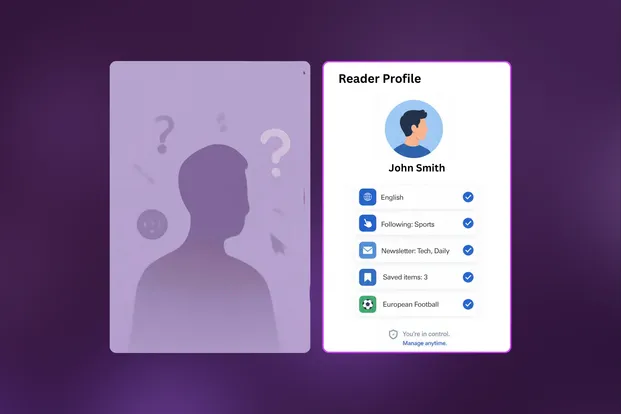
Where standalone tools generate anonymous answers from unknown users, Nexa gives you invaluable information on identities, collecting answers from known users or even from anonymous users who can be identified later if they register.
This means poll responses go beyond hand-wavey "63% of respondents prefer morning newsletters" to instead allow you to learn which specific users prefer mornings, what subscriptions those users hold, which groups they belong to, and what content they've previously interacted with.
That level of detail in data turns survey responses into segmentation data which can be turned into revenue actions like targeted offers, personalised content, sponsorship packages backed by declared interest data, or subscription upgrade prompts based on engagement patterns.
Here’s a scenario: A sports editor runs a weekly match prediction poll on a major site. Nexa records which users participate, how often, and what teams they follow. Those users can then be grouped automatically into segments like “active football fans”, “premium subscribers”, or “engaged 3+ times this week” and be served a targeted half-time offer for an upgraded subscription package. The same segment data can be packaged for sponsors, because now you can outline and target, say, 12,000 declared football fans who engage with prediction content weekly. Meanwhile, there's no requirements to deal with spreadsheet and data exports, or manually go through results to try and connect patterns.
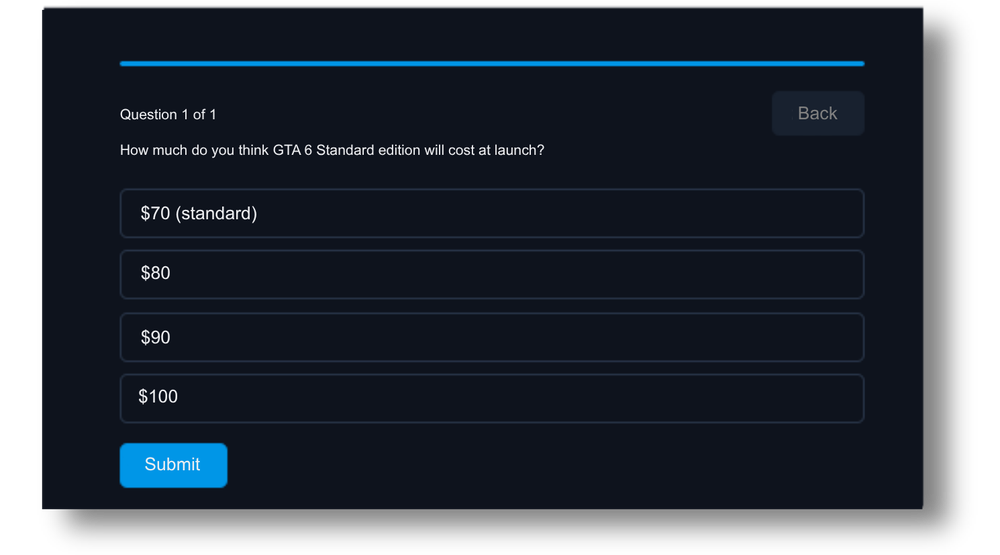
Polls in Nexa aren't limited to a single question with three radio buttons. A poll can contain multiple questions spanning different formats: single choice or multiple choice, free text, ratings and scales, or simple yes/no responses. They can be as quick as a one-tap vote on a match prediction, or as involved as a multi-step survey covering content preferences, demographics, and product feedback.
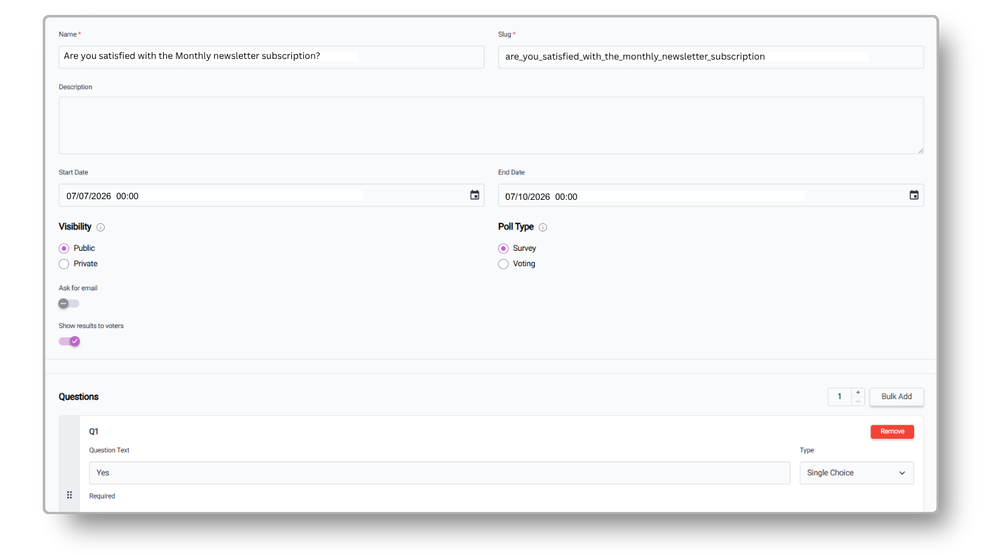
The creation process is straightforward. Admins set a name, choose a visibility level (e.g. public, registered users only, or private to specific groups), schedule start and end dates, and build out questions. The front-end can render a progress bar so users can see where they are and move between questions and revise answers before submitting.
This is where Polls connects to the broader Nexa identity layer.
Instead of showing every poll to every visitor, admins can define targeting rules based on what Nexa already knows about a user such as their entitlements, subscription status, expressed preferences, or group memberships.
That means that a poll about premium content satisfaction can be set to only show to users with active premium subscriptions, while a feedback survey about morning newsletters only appears for users which see the morning digests. Or in another example, a sponsor-branded prediction poll could target users in a specific geographic region who follow a particular sport.
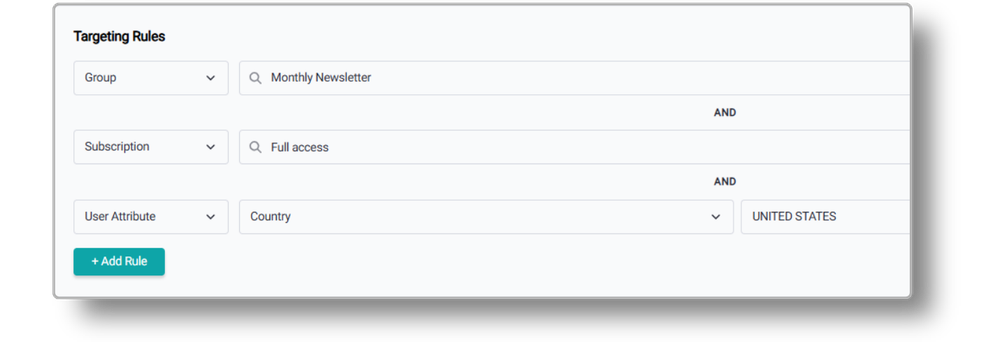
Rules are combined with “AND” logic, which lets you precisely slice audiences without complex configuration. The result is higher response rates because the questions are more relevant and cleaner data because you're not mixing signals from fundamentally different audience segments.
Not every site owner wants to gate polls behind a login, and equally not every reader is ready to register. For public polls, Nexa allows anonymous participation while giving admins control over what's required: visibility can be set to public, and a toggle sets whether anonymous users must provide an email address before responding.
This creates a spectrum of options. A site running an event prediction poll might want fully anonymous voting to maximise participation, while a news publisher collecting editorial feedback might require an email, creating a lightweight opt-in that balances reach with data capture.
For media sites and brands operating under GDPR, poll data stays within your Nexa instance and is not shared with our sent to third parties. Consent handling remains on the site or app. Nexa collects only what the poll is configured to collect For anonymous users, nothing is stored beyond their responses and any email they voluntarily provide. Nexa users retain full control over what is gathered and how it is used.
Integration uses the Nexa SDK, which is already present on sites using other Nexa features such as identity, interactions, and offers. For publishers already running Nexa, adding polls means rendering the poll component, style it within your design system, and deciding where the polls appear. The SDK handles identity matching, response capture, and data storage.
Polls can live as standalone pages with full progress tracking, as embedded components within articles, or as modals triggered by page rules. The visual presentation belongs entirely to your site. Nexa handles the logic.
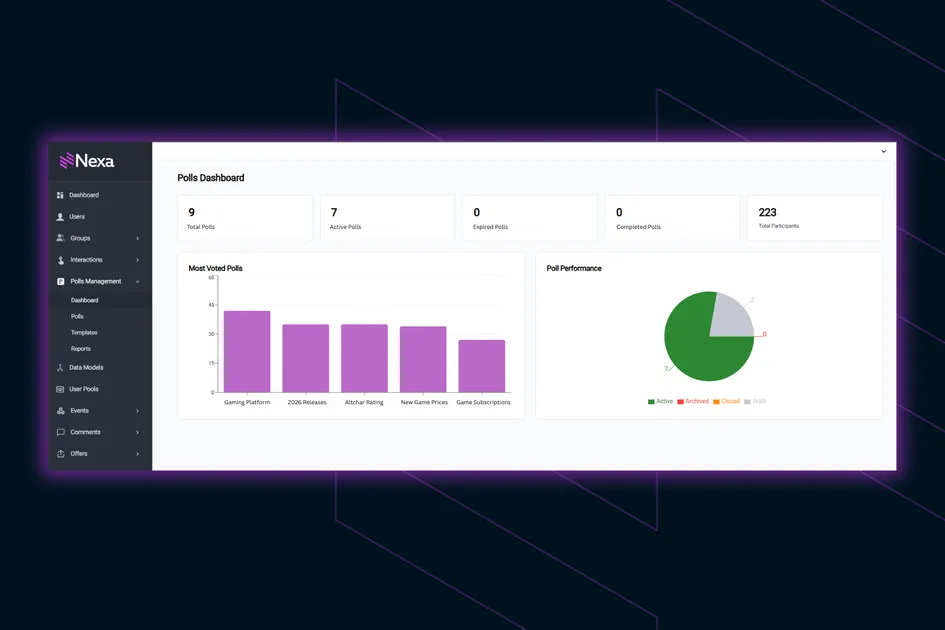
Each poll comes with a reporting dashboard showing answer breakdowns, participant lists, and hourly activity charts filterable by date range. The hourly view is particularly useful for identifying when your audience is most receptive: if engagement spikes at lunchtime on weekdays, that's a signal about when to surface offers, newsletters, or sponsored content.
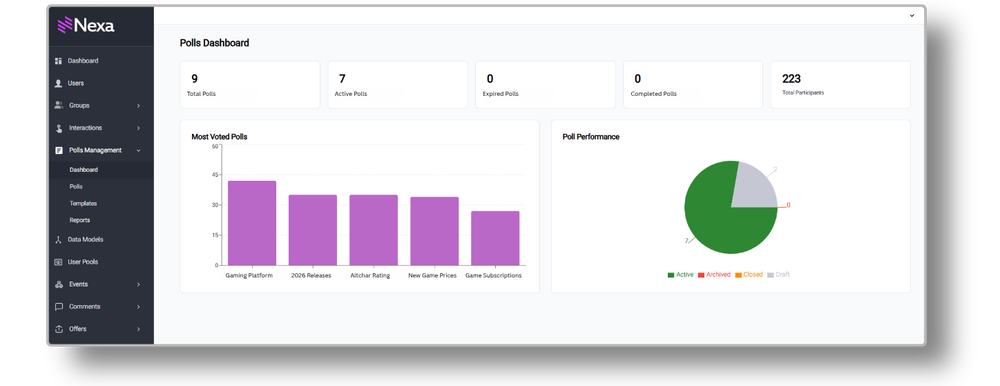
The dashboard also aggregates across all polls. At a glance you can see total active polls, total participants, and the most engaged polls. For teams running multiple polls across different sections or segments, this overview keeps everything visible without needing to drill into each poll individually.
For commercial and ad teams: declared interest data from polls strengthens direct-sold advertising and sponsorship propositions. Instead of selling audience segments based on inferred behaviour (“users who read sport”), you can sell segments based on declared preference (“users who told us they follow football and prefer video highlights”). Declared data commands higher CPMs because it’s more reliable than behavioural inference, and it doesn’t depend on third-party cookies which are in structural decline.
Sites which run recurring polls (e.g. weekly predictions, monthly satisfaction checks, post-event feedback) can save any poll as a template. The template preserves the full question structure.
Creating the next iteration just means changing the name and adjusting the questions as needed, removing repetitive setup work which can prevent teams from polling more regularly.
The next phase introduces conditional logic between questions: poll chaining.
The principle is progressive profiling. The first question establishes a broad segment, and subsequent questions adapt based on the answer. An example would be if a user indicates they're interested in football, the poll skips cricket questions and dives deeper into football. If a participant selected "I don't have a subscription," the next question can be to learn why that is rather than asking about premium feature satisfaction.
The commercial outcome: over time, as users interact with multiple chained polls, Nexa builds an increasingly detailed profile without asking irrelevant questions. This reduces reliance on third-party data brokers for audience enrichment, builds richer segments for programmatic and direct-sold campaigns, and lets publishers personalise subscription and upgrade offers based on progressively gathered declared data. Each interaction refines the profile at no additional cost.
Polls aren't an isolated feature but instead are one more set of signals feeding into the unified audience profile that Nexa maintains for every reader or customer.
A user who votes in a sports prediction poll, holds a premium subscription, and belongs to the "morning digest" newsletter group presents a complete picture that no single analytics tool or disconnected survey platform can assemble.
That composite profile is what powers better content targeting, smarter subscription packaging, stronger ad propositions, and editorial decisions grounded in what your audience actually told you rather than what you inferred from their clicks. It connects to the same entitlements and access controls and identity layer that Nexa already provides.
Polls are available now in Glide Nexa. Connect with a Glide product specialist to activate the feature, or book a demo to see targeting rules, templates, and reporting in action.
How many questions can a poll have? There's no fixed limit. A poll can contain a single quick-vote question or a multi-step survey with dozens of questions across different answer types.
Can anonymous users vote? Yes, if the poll visibility is set to public. Anonymous users are fingerprinted to prevent duplicate voting, and their responses can be linked to a registered account if they sign up later.
What is poll chaining? Conditional logic between questions that lets polls adapt to previous answers. Based on a user's answer to one question, subsequent questions branch or skip, which allows progressive profiling without asking irrelevant questions.
Does this cost extra on top of a Glide Nexa licence? No. Polls are included in the standard Nexa flat-licence pricing with no per-response fees.
How long does site or app integration take? For sites already using the Nexa SDK, adding polls is solely down to your internal cadence: rendering the component, applying styles, and deciding where polls appear.
Related articles:
No matter where you are on your CMS journey, we're here to help. Want more info or to see Glide Publishing Platform in action? We got you.
Book a demo
